
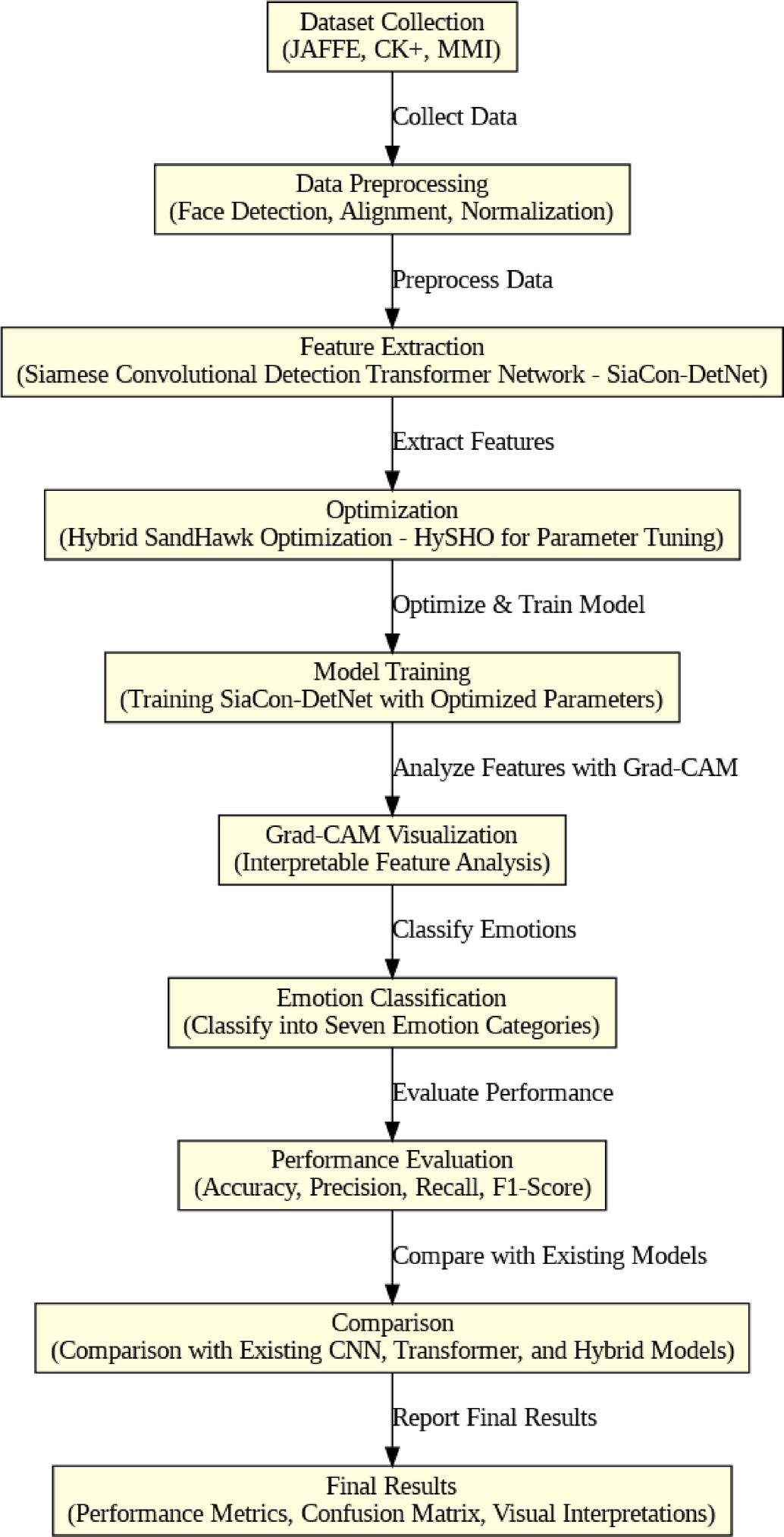
Artificial intelligence systems face a major hurdle when trying to understand human emotions in real-world environments. While laboratory tests often yield strong results, models typically struggle when confronted with messy, uncontrolled everyday data. A newly detailed research study published in Scientific Reports addresses this gap by introducing an innovative framework designed to dramatically improve how machines interpret human feelings.
By shifting how computational pipelines process emotional cues, the approach solves longstanding generalizability issues. The methodology demonstrates that intelligent systems can become both drastically more efficient and significantly more accurate at perceiving human expressions.
Tackling Real-World Limitations in Affective Computing
Facial emotion recognition (FER) serves as a foundational element for human-computer interaction, affective computing, and psychological analysis. Traditionally, automated systems rely on multiple distinct channels—known as modalities—to capture emotional data. These include:
- Facial expressions
- Written text
- Speech patterns
- Biosignals such as electroencephalography (EEG), blood volume pulse (BVP), and electrocardiogram (ECG)
Although researchers frequently study these signals either independently in uni-modal setups or combined in multi-modal configurations, prevailing approaches suffer from a distinct drawback. Most existing models are built around tightly controlled laboratory experiments, leaving them ill-equipped to handle the unpredictable nature of real-world applications.
Boosting Efficiency and Task Success
The newly published findings demonstrate that structural improvements to processing frameworks can yield massive performance gains. According to the data released in the study, the optimization framework cuts computing resource usage by two-thirds.
Simultaneously, the system more than triples its success rate when handling virtual tasks compared to conventional baseline models. By streamlining how various emotional modalities are integrated and evaluated, the framework overcomes the low generalizability that has historically plagued affective computing models.
Implications for Future Human-Computer Interaction
The ability to process multi-modal emotional data efficiently opens the door for more responsive and reliable intelligent systems. Because the framework reduces computational overhead while boosting task success, developers can look toward deploying advanced emotion-recognition tools outside of specialized laboratory settings.
As human-computer interaction continues to evolve, bridging the gap between controlled testing and real-world execution remains essential for creating systems that genuinely perceive and adapt to human emotional states.
