
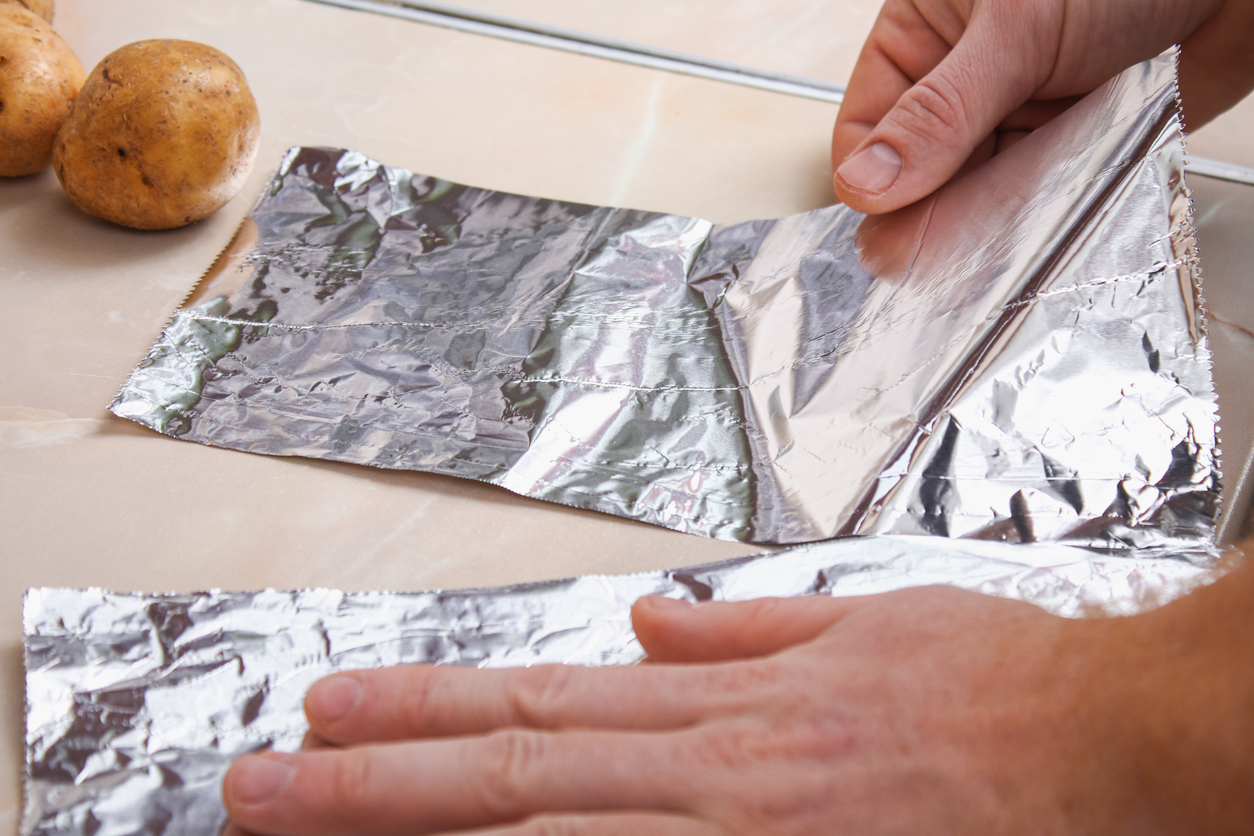
Pull a sheet of aluminum foil off the roll, and a familiar question often follows: should the shiny side face the food, or should it be the matte side? This enduring kitchen debate recently drew renewed attention after a report by the Spanish daily MARCA explored the purpose behind the two distinct finishes, sparking interest across international home and lifestyle sites.
For decades, home cooks have argued that one side conducts heat better or reflects thermal energy differently. However, the true origin of the two textures comes down to simple manufacturing rather than a deliberate cooking design.
How Aluminum Foil Gets Its Two Sides
Aluminum foil begins as a thick slab of metal that passes repeatedly through heavy industrial rollers until it reaches a very thin gauge. According to explanations highlighted by Apartment Therapy, the metal eventually becomes too delicate to pass through the final rollers on its own.
To prevent tearing during the final pass, manufacturers press two layers of foil together at the same time. This production detail creates the dual-sided finish:
- The Shiny Side: The external surface that comes into direct contact with the polished steel rollers retains a mirror-bright sheen.
- The Matte Side: The interior surface that pressed against the second layer of foil turns dull and matte.
Food scientist Abbey Thiel explained to *EatingWell* that the dull appearance simply results from the two sheets touching during milling, noting that the manufacturing process does not impart any functional difference in thermal conductivity between the surfaces.
Does Standard Foil Direction Matter?
For standard and heavy-duty aluminum foil, the side facing the food makes no difference in cooking performance. Major manufacturer Reynolds confirmed to *EatingWell* and Apartment Therapy that “it’s perfectly fine to place your food on either side” of its standard products and that “the performance of the foil is the same, whichever side you use.”
Popular theories suggesting that the shiny side reflects heat back into a dish or that the matte side absorbs heat faster are incorrect. Both sides handle baking, roasting, and wrapping identically.
The Exception: Non-Stick Aluminum Foil
While standard foils can be used interchangeably, non-stick varieties are an important exception. Because non-stick foil features a specialized coating applied to only one side, the orientation matters significantly.
Reynolds explicitly advises consumers using non-stick foil to keep the dull side facing upward toward the food. Placing the sheet upside down would put the non-stick coating against the baking pan rather than the meal, defeating its purpose. Checking the packaging label before tearing off a sheet ensures proper use, while standard foil remains entirely up to personal preference.
