
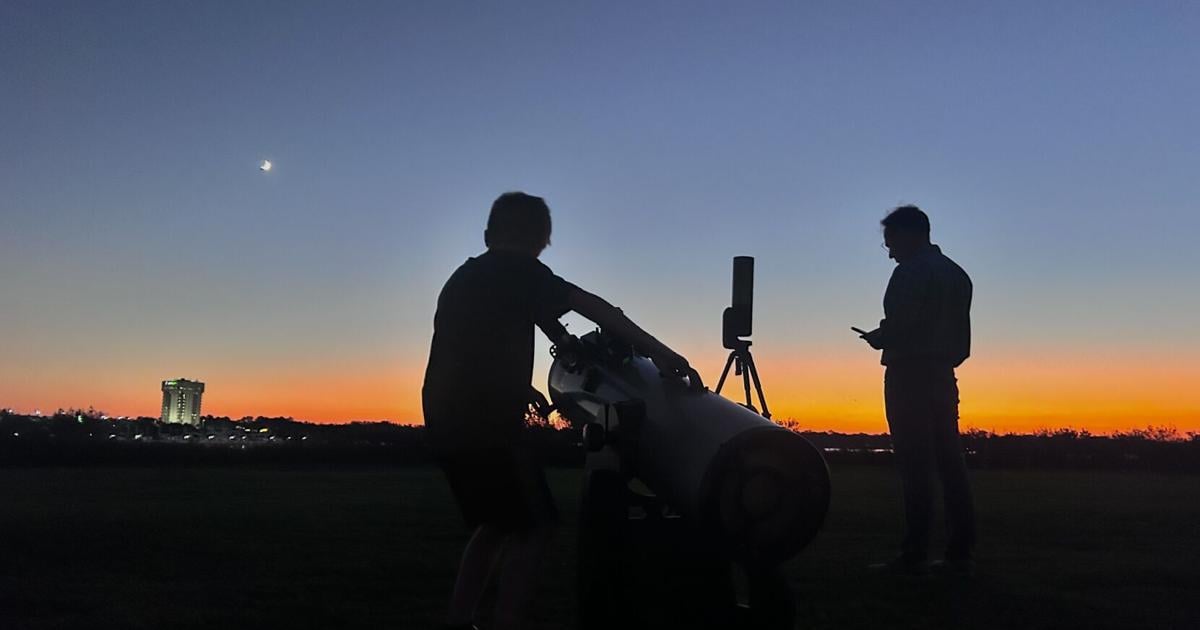
As the sun sets over the Ashley River, painting the sky in shades of soft pink, peach, and butter yellow before fading into a deep blue, most bystanders watch the colors disappear. However, the members of the Lowcountry Stargazers wait for that exact moment to pass. Once darkness falls, they are ready to bring outer space closer to Charleston residents.
While the group's members insist they are strictly hobbyists and amateur astronomers rather than professionals, they regularly observe celestial phenomena that most people never get to witness. Their collective mission centers on public outreach, education, and sparking a lifelong interest in astronomy, particularly among young people in the community.
Weekly Gatherings at Brittlebank Park
Weather permitting, the Lowcountry Stargazers host public outreach events every Wednesday evening at Brittlebank Park. Families, dog walkers, and curious passersby frequently wander over to the nearly 10 telescopes set up along the riverbank to chat with members and peer through the lenses.
For longtime members like Caleb Shipman, who has spent about a decade with the organization, these interactive sessions are the highlight of the club. Shipman enjoys welcoming visitors who do not know what to expect and attempting to dazzle them with views of the cosmos. During these events, visitors can learn about the fundamental mechanics of stargazing, including the differences between reflecting and refracting telescopes, and how Sir Isaac Newton pioneered the use of mirrors to reflect and focus light.
Diverse Interests and Advanced Astrophotography
The nearly 80 members of the club bring a wide range of specialties to the organization:
- Some members focus primarily on observing the moon and planets.
- Marc Fisher specializes in viewing and photographing the sun safely using a specialized solar telescope.
- Other members dive deep into astrophotography, capturing distant nebulae, galaxies, and star clusters.
Member Angel Cobiella utilizes modern electronically assisted digital telescopes, commonly known as smart telescopes. After transitioning to lighter equipment in retirement, Cobiella uses app-controlled smart telescopes that automatically pinpoint deep-sky objects. By layering photos with specialized software, he produces vibrant, highly detailed images of targets like the M47 star cluster and the Horsehead Nebula purely for the joy of discovery.
Community Involvement and Member Perks
Beyond their weekly park gatherings, the Lowcountry Stargazers partner with local schools, libraries, and Boy Scout and Girl Scout troops to introduce children to astronomy. Members also benefit from monthly meetings, an active messaging platform for sharing advice, and access to a private, dark-sky field at Johns Island County Park available 365 days a year.
Membership fees are affordable at $30 for families, $20 for individuals, and $10 for students, and prospective members do not need any prior experience or equipment to join. Leaders like club president Marty Dunn, who was hooked after attending his first outreach event five years ago, emphasize that seeing incredible sights like the Milky Way right here in Charleston remains a massive perk for local enthusiasts.
