
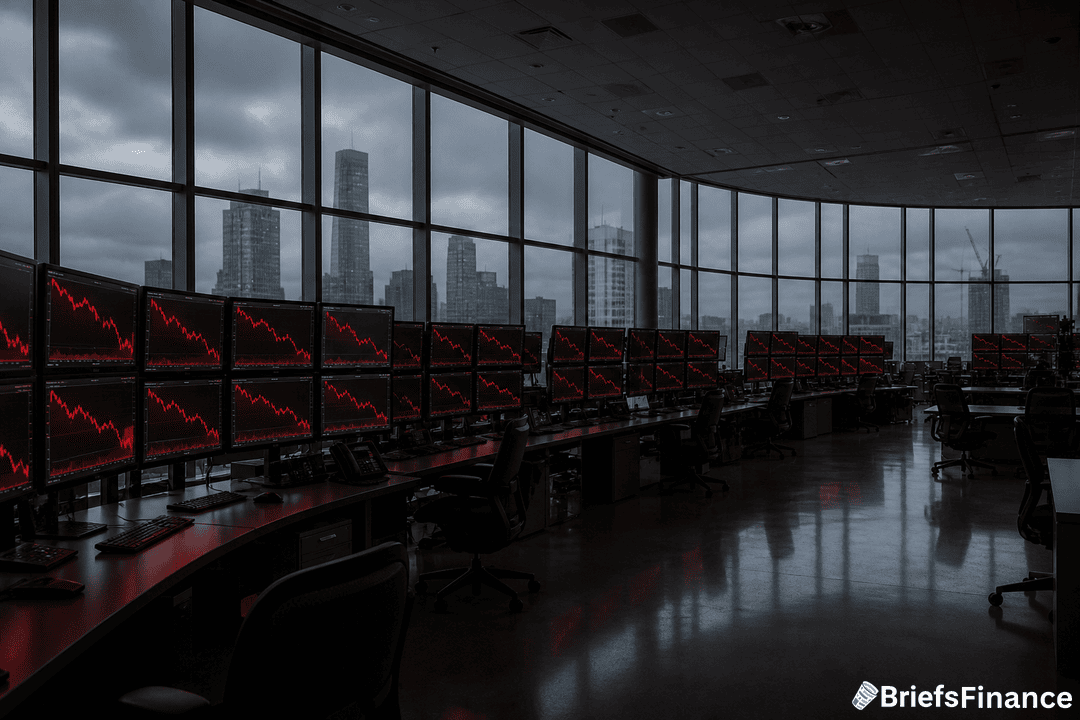
Financial markets are facing a period of heightened volatility as a broad-based sell-off hits major indices, driven largely by waning confidence in the artificial intelligence sector. Following a sharp decline on November 20, 2026, where the Dow Jones Industrial Average tumbled 1,101 points, investors are recalibrating their expectations for the remainder of the year.
Market Correction and AI Skepticism
The recent downturn has pushed the Nasdaq, S&P 500, and Dow into correction territory. The sell-off has been widespread, with more than 90% of S&P 500 stocks experiencing declines. This shift in sentiment is largely attributed to mounting doubts regarding the sustainability of heavy corporate spending on AI infrastructure and the potential impact on future profitability.
The cooling of the AI trade is particularly visible in the performance of industry leaders. Anthropic, which recently went public at a valuation of approximately $1.5 trillion, saw its shares decline by more than 5% in after-hours trading. Despite generating $33 billion in revenue this year, the company remains unprofitable, with investors currently paying more than 40 times its sales—a stark contrast to the 3 times sales multiple Amazon commanded when it went public in 1997.
Shifting Expectations and Economic Headwinds
As the tech rout deepens, prediction markets have significantly slashed the odds of the S&P 500 reaching the 8,000-point milestone. This pessimism is compounded by broader economic concerns, including persistent inflation. Federal Reserve officials have signaled that interest rate paths remain flexible, with recent data showing little progress in curbing inflation in key sectors.
The market instability is not limited to the technology sector. Retailers and consumer-facing companies have also felt the pressure. For instance, Williams-Sonoma shares dropped 15.3% following a quarterly revenue report that fell slightly short of Wall Street expectations, while Walmart saw a 1.2% decline despite beating profit and revenue forecasts.
Investor Outlook
While the current environment is characterized by uncertainty and global equity declines—marking the longest losing streak for the MSCI All Country World Index since September 2023—market experts suggest a measured approach. Briefs Finance CEO Jaspreet Singh noted that while the immediate future remains difficult to predict, long-term investors often view such downturns as opportunities to accumulate assets rather than reasons to engage in panic selling. Analysts expect volatility to persist as the market navigates these economic headwinds through the end of the year.
