
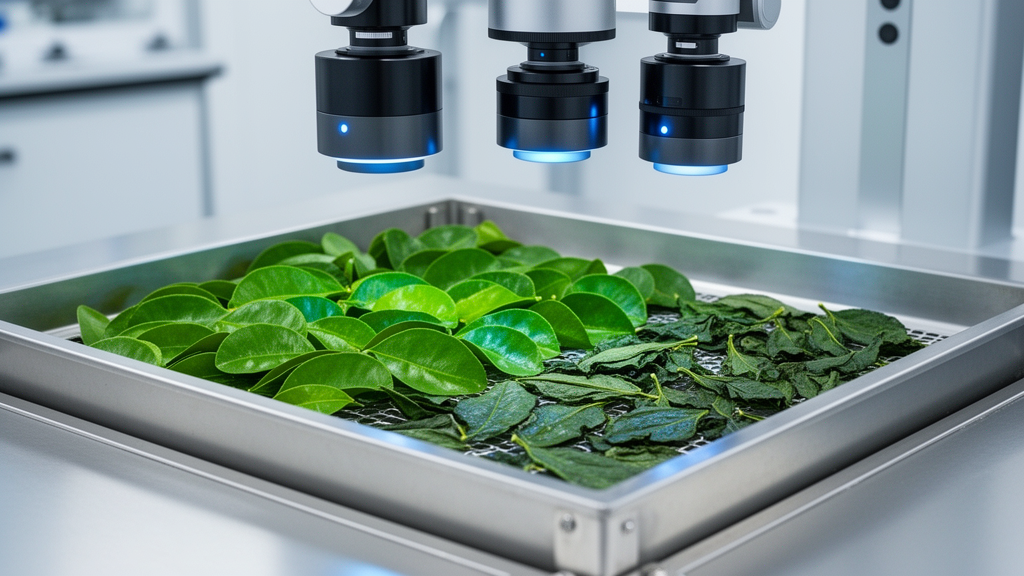
Kaffir lime (*Citrus hystrix*) leaves are prized globally for their distinctive aroma and traditional medicinal qualities. However, because the harvested foliage features a naturally high moisture content, it tends to degrade rapidly after harvesting. Preserving these botanical components requires effective dehydration protocols to stop spoilage, ensure microbial safety, and extend storage capabilities.
A scientific review recently published in Food Science and Biotechnology outlines how cutting-edge drying technologies and artificial intelligence can work together to secure the quality and commercial shelf-life of kaffir lime leaves. Authored by N. N. Safie and colleagues, the paper investigates how to optimize the preservation of key marker compounds without sacrificing visual appeal.
Evaluating Advanced Dehydration Techniques
The primary benchmark for evaluating processing success in kaffir lime leaves is the retention of specific bioactive and marker compounds, most notably citronellal, citronellol, and sabinene. According to synthesized experimental data, different drying methods exert a massive influence on how well these compounds and the visual appearance are maintained.
Researchers examined several distinct dehydration approaches:
- Ambient and convective hot-air systems
- Solar-assisted drying
- Microwave-based processing
- Far-infrared dehydration
Among these, far-infrared drying proved particularly effective, providing rapid moisture extraction while maintaining high retention rates for sensitive bioactive compounds. Furthermore, the review emphasizes that operational environments characterized by low temperatures and reduced humidity consistently outperform conventional high-energy, high-temperature methods in preserving vital marker profiles.
Integrating Artificial Intelligence Into Commercial Processing
Scaling up advanced dehydration technologies for industrial use presents distinct challenges. Producers must carefully balance energy consumption, total processing durations, and overall industrial throughput.
To navigate these operational hurdles, the review points to the integration of artificial intelligence as a transformative solution. Modern computational frameworks—including machine learning architectures, deep learning models, and artificial neural networks—are increasingly deployed to monitor leaf quality in real time and dynamically optimize drying parameters.
By leveraging these algorithmic models, producers can drive the creation of premium botanical products while enhancing energy efficiency. These technological advancements directly support sustainable food production initiatives aligned with global development targets.
