
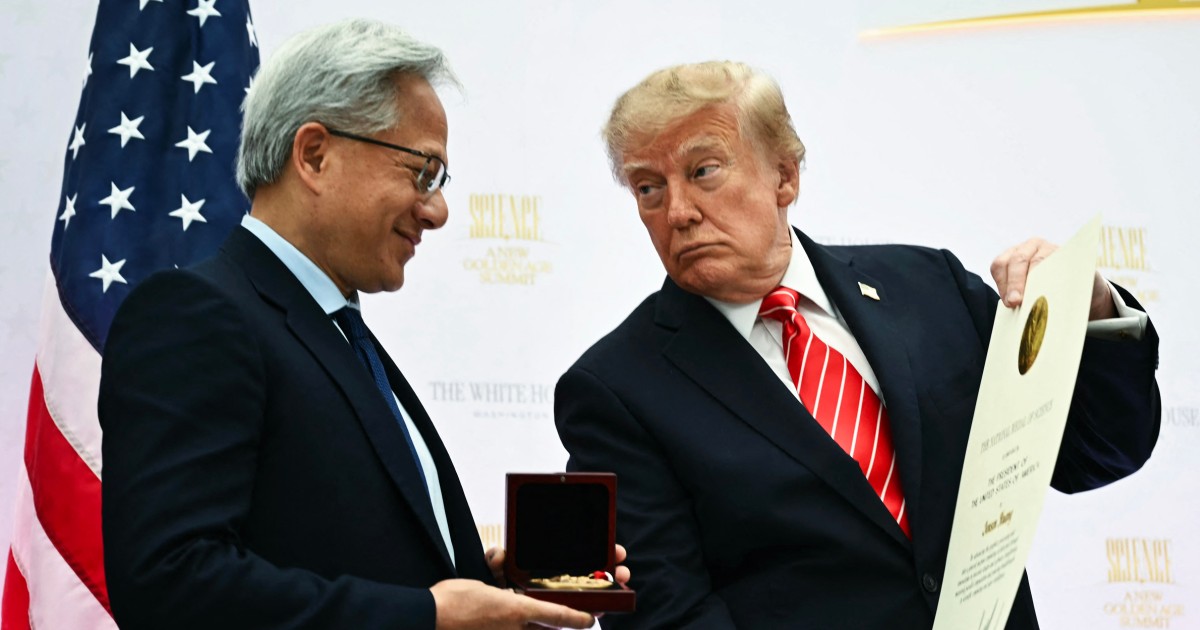
President Donald Trump has weighed in on the high-profile return of Jensen Huang to Nvidia, addressing both the possibility of a presidential pardon and the executive's upcoming appearances before Congress. Following Huang’s reinstatement as CEO, the president expressed confidence in the tech leader’s integrity while acknowledging the legal complexities surrounding his tenure.
Huang’s return to the helm of the chipmaker follows a tumultuous period that saw him briefly ousted amid allegations of illicit AI chip sales to China—a situation that raised significant national security concerns. As Huang prepares to testify before the Senate Banking Committee on December 3, the administration has signaled a shift in its stance regarding his leadership.
The Question of Presidential Pardons
In an interview with the New York Post, President Trump addressed the potential for legal intervention regarding Huang’s past business dealings. While Trump acknowledged that a pardon remains a theoretical option, he emphasized that he does not believe such a measure will be necessary.
The president described Huang as a “very smart person” and noted that, in his personal experience, he has found the executive to be “100% aboveboard.” Trump’s comments suggest a desire for transparency during the upcoming congressional hearings, stating, “I think I want him to just tell the truth.” Regarding the legal strategy for the hearings, Trump added that while Huang’s lawyers will ultimately provide the counsel, he does not believe the CEO needs to invoke his Fifth Amendment right against self-incrimination.
National Security and Corporate Reinstatement
The path to Huang’s reinstatement was paved by coordination between the company and federal authorities. Nvidia’s board of directors confirmed that the decision to bring Huang back was made only after receiving input from senior levels of the U.S. government, which indicated that his return no longer poses a risk to national security.
President Trump echoed this sentiment on Truth Social, stating that the government has no reason to believe that Huang’s leadership at Nvidia currently threatens the country. This development marks a significant pivot from the earlier controversy, which centered on claims that the company had engaged in unauthorized technology transfers to Chinese entities.
Looking Ahead to Capitol Hill
As the December 3 testimony approaches, the business world is closely watching how Huang will address the allegations that led to his initial departure. Despite the legal and political scrutiny, Huang has already begun reasserting his vision for the company. In recent internal meetings, he reportedly pushed back against the necessity of formal succession planning, arguing that such structures create unnecessary hierarchy within Nvidia’s unique business model.
While the White House has not provided further details on the administration's ongoing oversight of the company, the president’s public support provides a notable tailwind for Huang as he attempts to stabilize the chipmaker and navigate the upcoming legislative inquiry.
