
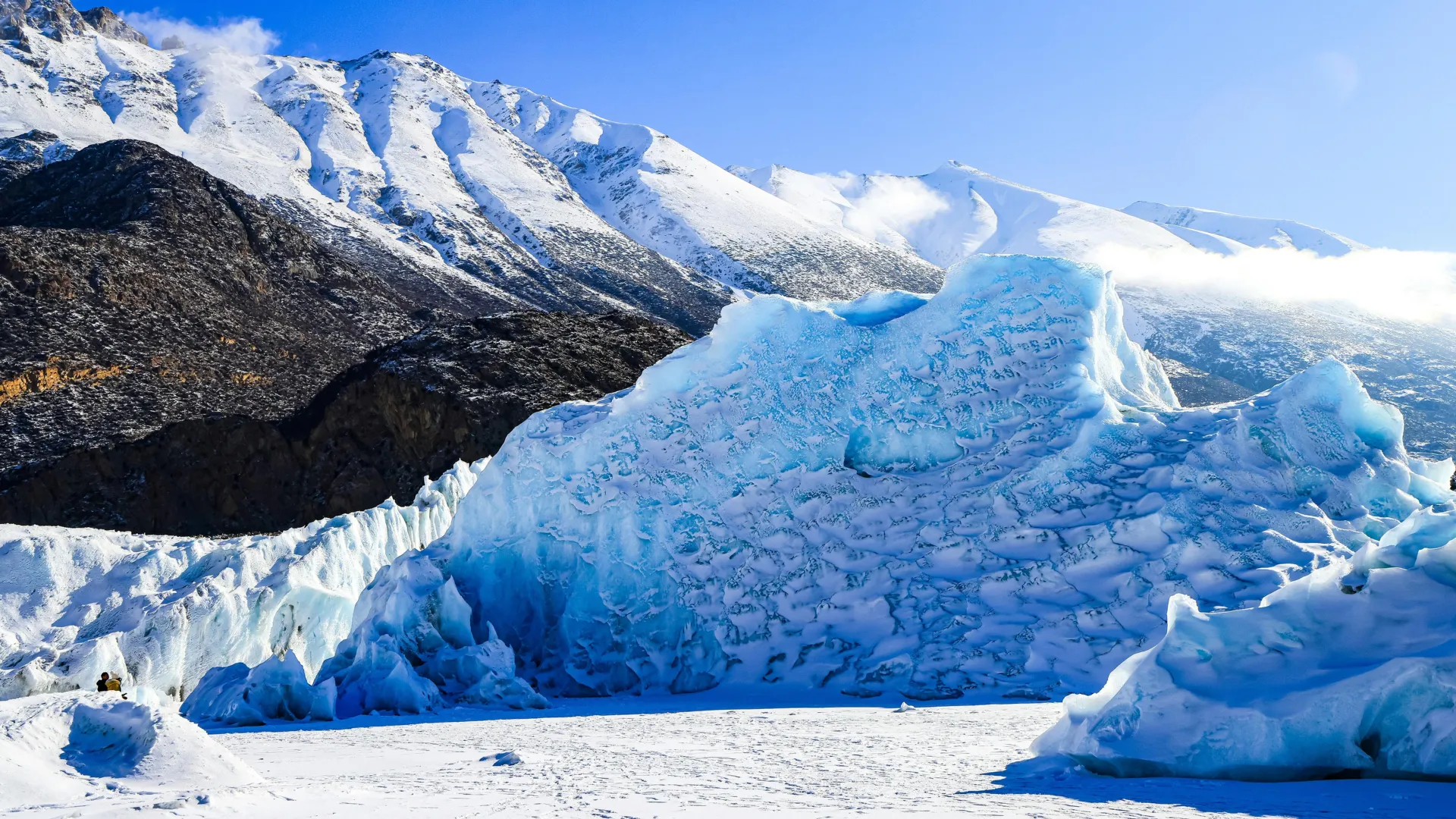
Scientists have identified ice samples from the Guliya Plateau in northwestern Tibet that date back more than 128,000 years, marking the oldest ice cores ever recovered from the region. This discovery extends the known glacial record for the area by over 100,000 years, providing a rare, long-term perspective on how mountain glaciers survived the transition from the last ice age.
Validating Ancient Climate Data
The research, published in Science Advances, relied on ice cores extracted in 1992 and 2015. Despite the decades between drilling, the samples showed consistent oxygen isotope patterns, confirming the reliability of the ice as a climate archive. To establish an accurate timeline, the international team utilized radioactive isotopes of beryllium and chlorine to identify the Leschamp Geomagnetic Excursion—a magnetic field disturbance from over 41,000 years ago—and cross-referenced these findings with local cave deposits.
Lead author Lonnie Thompson of The Ohio State University noted that this record is unique outside of polar regions, offering critical evidence that large Tibetan ice masses persisted through the early Holocene. By providing a more precise chronology, the study enables researchers to better reconstruct natural climate cycles and understand the historical behavior of Earth’s glaciers. The project was supported by the U.S. National Science Foundation and involved a collaborative team from the United States, Switzerland, and China.
