
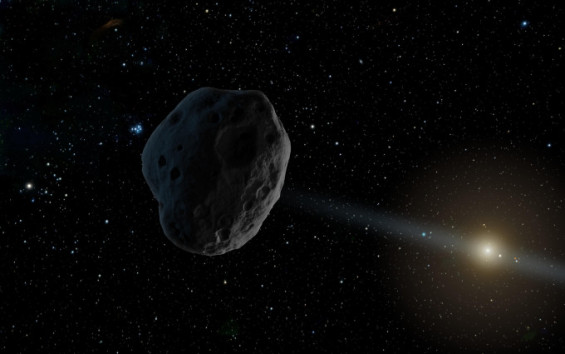
A Brief Celestial Visit
The International Astronomical Union’s Minor Planet Center (MPC) officially identified the object as a natural celestial body rather than space debris, following observations from the Lowell Discovery Telescope in Arizona and the Mauna Kea Observatory in Hawaii. As a Near-Earth Object (NEO), 2026 QQ8 is expected to remain in Earth's orbit only until early December before continuing its journey through the solar system.
Experts note that mini-moons are relatively common but difficult to detect due to their small size and high speed. While the exact origin of 2026 QQ8 is still under investigation, it is likely that the object originated from the asteroid belt between Mars and Jupiter. Its capture occurred because it approached Earth at a speed slow enough for the combined gravitational influence of the Earth and the Moon to alter its trajectory into a temporary orbit.
There is no risk of impact associated with this visitor. Scientists emphasize that even if 2026 QQ8 were to enter Earth's atmosphere, its small size would cause it to disintegrate harmlessly, potentially appearing only as a bright meteor or producing a minor sonic boom.
