
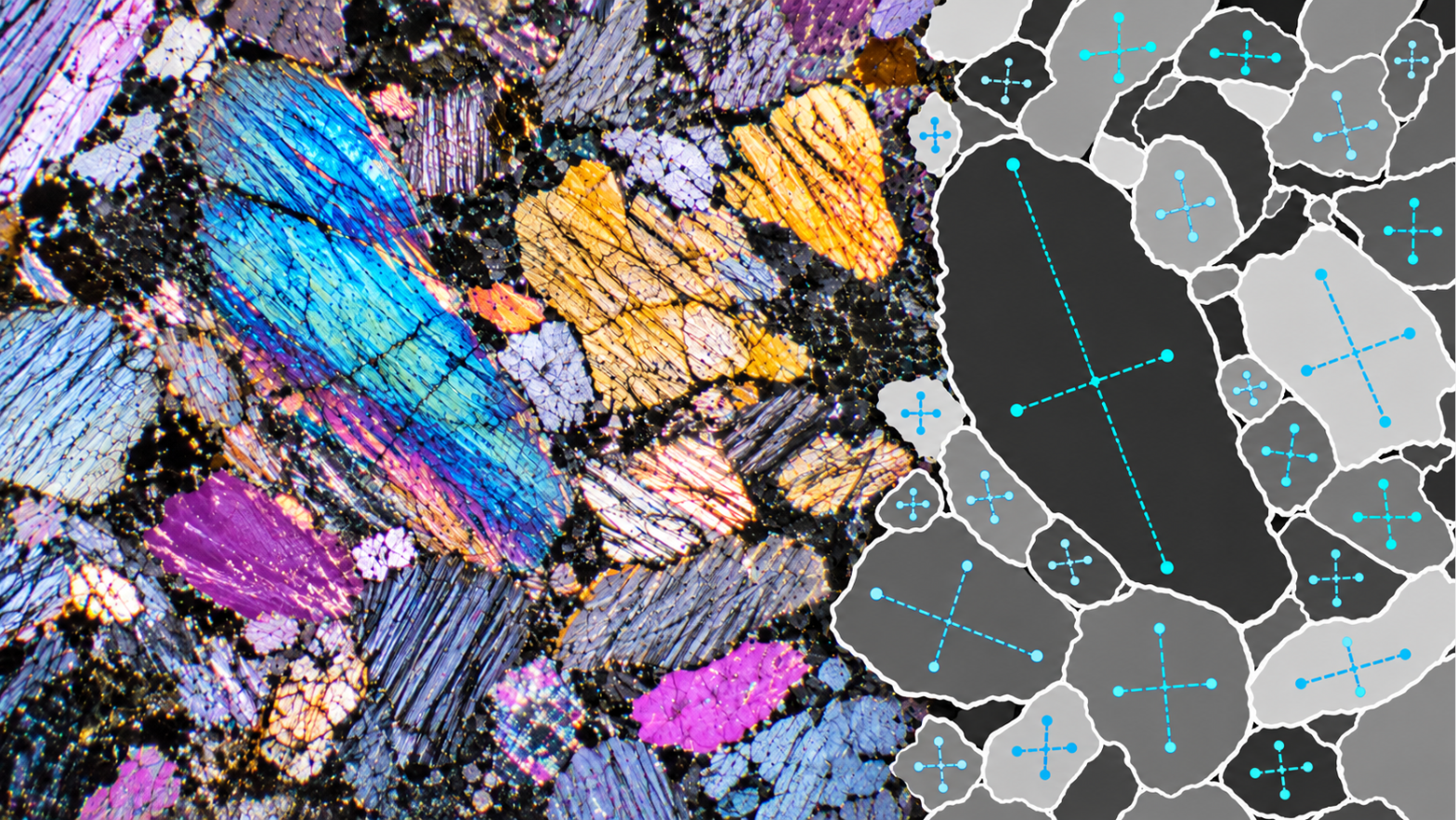
Researchers at Tohoku University have introduced a streamlined method for quantitative rock analysis, potentially removing the need for expensive, specialized equipment in geological studies. By pairing a conventional polarizing microscope with new software called NicoNavi, scientists can now map the internal structures of rocks with greater ease and efficiency.
How the Technology Works
The technique relies on the interaction between polarized light and mineral grains. As a thin slice of rock is rotated 360 degrees under a microscope, individual mineral grains shift in brightness and color based on their unique crystallographic orientations. NicoNavi captures these changes through video recordings, automatically identifying grain boundaries and generating detailed microstructural maps.
The software integrates several analytical steps into a single workflow, including mineral classification and three-dimensional analysis. For specific minerals like quartz, the team reports that a full c-axis orientation analysis can be completed in approximately 10 minutes with minimal additional optical measurements.
Validating the Approach
To ensure the accuracy of the new method, Dr. Tan Furukawa and Professor Tatsuki Tsujimori compared NicoNavi’s results against electron backscatter diffraction (EBSD)—a standard, high-precision technique that requires electron microscopy. The findings, published in the Journal of Petrology on November 9, 2026, showed that the optical approach produced results consistent with EBSD for grain statistics and orientation distributions.
While the team notes that the optical method has limitations when neighboring grains share similar properties, it serves as a practical alternative for routine analysis. By lowering the barrier to entry, this development aims to provide universities and research laboratories with a more accessible way to study the geological history recorded within rock samples.
