
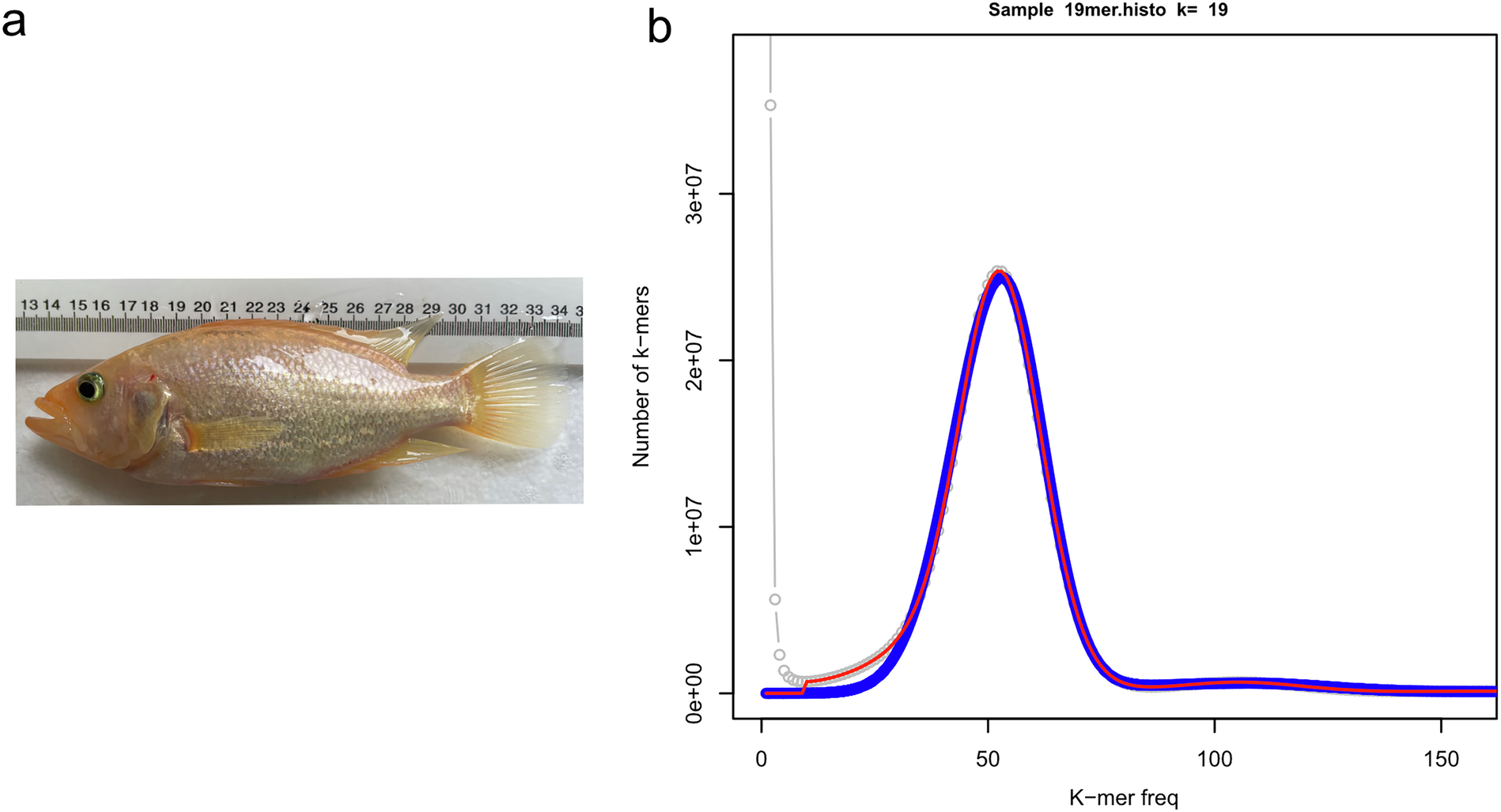
Researchers have published a new chromosome-level genome assembly and comprehensive functional annotation for the bay snook (Petenia splendida), a large predatory Neotropical cichlid native to Central America and utilized in freshwater aquaculture.
Published in Scientific Data, the work establishes a high-quality reference genome integrating PacBio HiFi long reads, Illumina short reads, and Hi-C sequencing data. Approximately 98.90% of the assembled sequences were successfully anchored, ordered, and oriented into 24 chromosomes, with five chromosomes each represented by a single contig.
Assembly consensus accuracy was evaluated using Merqury based on 19-mers, resulting in a genome-wide quality value (QV) of 50.93. Quality-filtered Illumina short reads and PacBio HiFi reads were mapped to the assembled genome, yielding mapping rates of 99.77% and 99.98%, respectively, which further supports the accuracy of the genome assembly.
Native to Atlantic-slope freshwater systems in southern Mexico, Belize, and Guatemala, Petenia splendida serves as an important subject for aquaculture and evolutionary biology. Cichlid fishes are widely studied models for investigating adaptive radiation, rapid speciation, and phenotypic diversification. The new genomic resources provide a foundational tool for future population genomics, molecular marker development, and comparative studies across Neotropical and African cichlid lineages.
