
New research suggests that the brain processes visual information far more dynamically than previously understood. A study involving human participants and rhesus macaques indicates that neurons in the inferotemporal and prefrontal cortices rapidly alternate between representing perceived and suppressed images, even when a person’s conscious perception remains steady.
The Mechanism of Binocular Rivalry
When each eye is presented with a different image, the brain typically cannot merge them, leading to a phenomenon known as binocular rivalry where perception alternates between the two. Using binocular flash suppression, researchers led by Doris Tsao at the University of California, Berkeley, observed that neural populations in the brain switch their representation of these competing images approximately every 60 milliseconds.
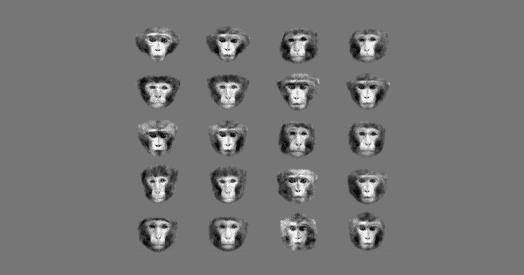
By recording from the brains of macaques while they viewed distinct faces, the team successfully reconstructed both the consciously perceived image and the suppressed image from these rapid neural oscillations. This suggests that higher-order visual areas are not merely coding for what is consciously seen, but are actively cycling through both available stimuli.
Implications for Consciousness
While the findings offer a new perspective on how the brain manages competing visual inputs, experts remain cautious about linking these oscillations directly to subjective conscious experience. Blake Richards of McGill University noted that the study highlights a complex selection process, suggesting that a downstream system likely determines which representation enters conscious awareness. Other researchers, such as Aran Nayebi of Carnegie Mellon University, argue that while the data provides insight into image recognition, it does not yet solve the mystery of how the brain generates conscious awareness.
The research team, which shared its findings in a recent preprint on bioRxiv, plans to investigate whether this rapid alternation originates in the primary visual cortex. Their long-term goal is to identify the specific mechanisms that govern conscious selection, potentially allowing for the direct control of visual perception.
