
New Framework Evaluates Efficiency of Ocean-Based Carbon Removal
A study published in *Nature Communications* introduces a unified framework to assess the effectiveness of geochemical ocean-based carbon dioxide removal (mCDR) strategies. As global efforts to meet climate goals intensify, researchers are increasingly looking toward the ocean to help sequester billion-ton-scale amounts of CO2 annually.
The research focuses on geochemical interventions, including:
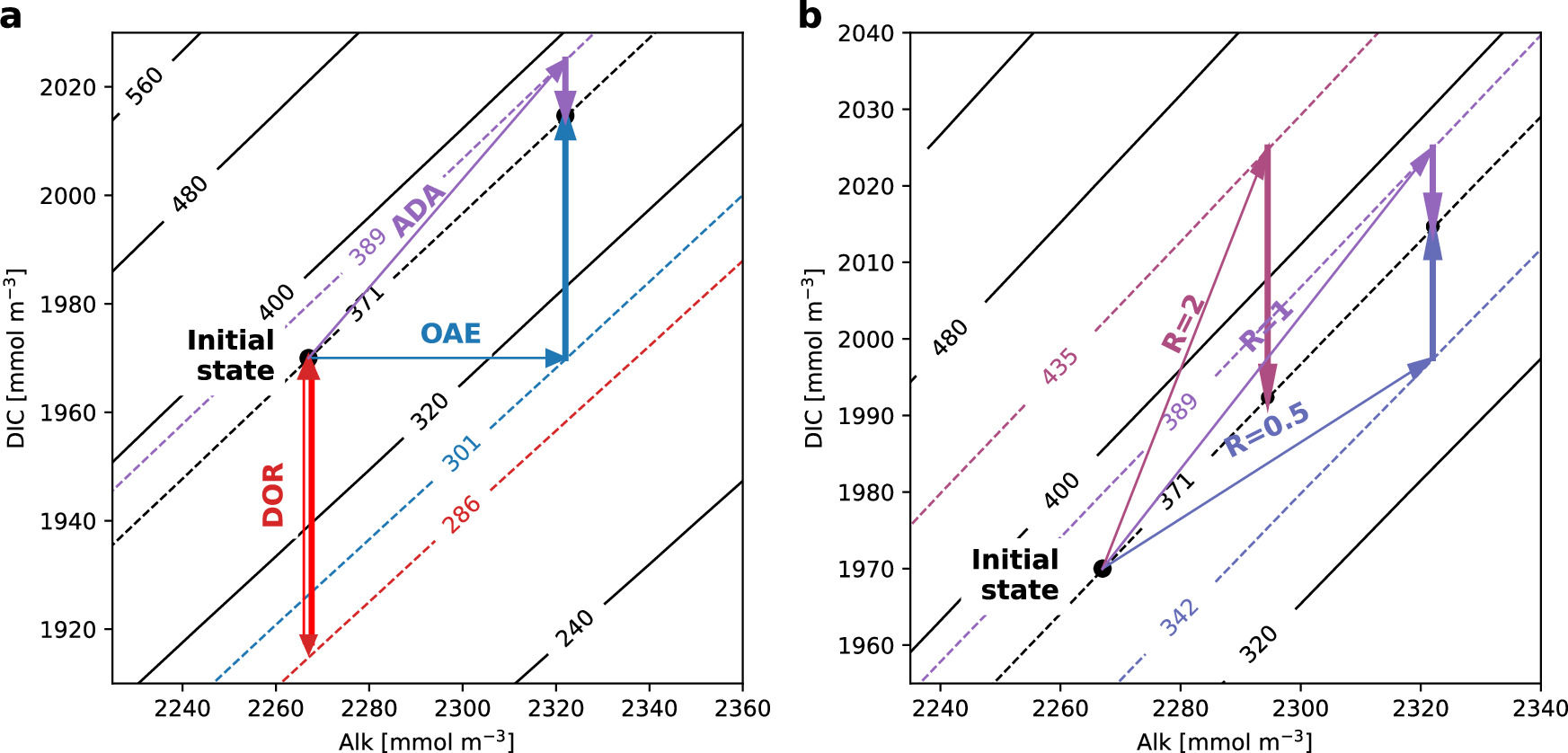
- Ocean Alkalinity Enhancement (OAE): Increasing the ocean's alkalinity to boost its capacity to absorb atmospheric CO2.
- Direct Ocean Removal (DOR): Removing dissolved inorganic carbon (DIC) directly from seawater.
- Combined Alkalinity and DIC Addition (ADA): A simultaneous increase of both, which occurs in processes like the direct dissolution of CaCO₃ in the ocean, which increases DIC and alkalinity in a molar ratio of 1:2.
Using a global ocean biogeochemical model, the researchers mapped the efficiency of these methods across different regions and seasons. The study notes that abiotic geochemical approaches are often viewed as promising due to their potential for durable storage and predictable outcomes.
The new framework allows scientists to quantify the "efficiency" of these interventions by measuring how much CO2 is captured per unit of material added. By mapping these perturbations in a unified DIC-alkalinity space, the study provides a standardized way to compare diverse CDR technologies. This is particularly critical for weathering-based approaches, where the balance between added alkalinity and DIC determines whether the ocean acts as a net carbon sink or source; for instance, depending on the ratio of DIC to alkalinity, these perturbations can lead to CO2 outgassing or net CO2 uptake.
The authors emphasize that while these geochemical pathways offer significant potential, their ultimate climate benefit depends on comprehensive assessments, including the environmental impact of material production, transport, and the specific marine conditions where they are implemented.
