
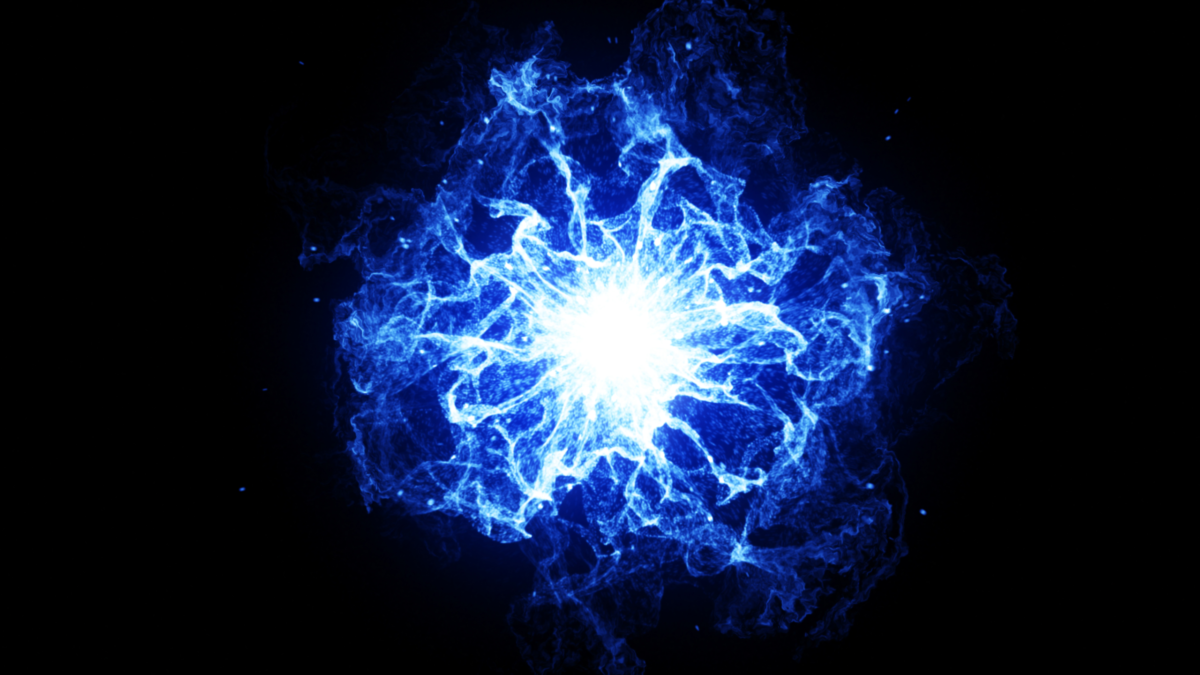
Miniature Ball Lightning Created in Lab Could Help Solve Century-Old Mystery
Physicists at the Chinese Academy of Sciences have successfully created a miniature version of ball lightning in a laboratory, a phenomenon that has puzzled scientists for centuries. The team, led by Chuliang Zhou, used a tungsten needle to generate a powerful electromagnetic wave that created a tiny ball of light, which they claim could help explain the mysterious phenomenon of ball lightning.
The researchers used an ultrashort laser pulse to fire at the tungsten needle, creating a concentrated electric field that stripped electrons from a cloud of argon gas, producing a superheated bubble of ionized argon - plasma. This plasma flickered into existence as a tiny ball of light, around 80 micrometers across, which expanded to several hundred micrometers over the next 100 nanoseconds.
The researchers tracked the expansion of the sphere and analyzed the wavelengths of light it emitted as it cooled, comparing their observations with theoretical models and computer simulations. Their findings suggest that the electromagnetic energy remained trapped within the plasma, helping sustain the glowing orb even as it expanded.
The creation of this miniature ball lightning in a lab could have significant implications for our understanding of the phenomenon, which has been reported in thousands of eyewitness accounts but has been difficult to study due to its fleeting nature. The researchers believe that their findings could help explain the behavior of ball lightning at larger scales, driven by lower-frequency electromagnetic radiation.
The ability to trap electromagnetic energy in a stable, localized structure could also open new avenues for energy-storage technologies and studying how light interacts with matter under extreme conditions. The research has been published in Nature Photonics.
