
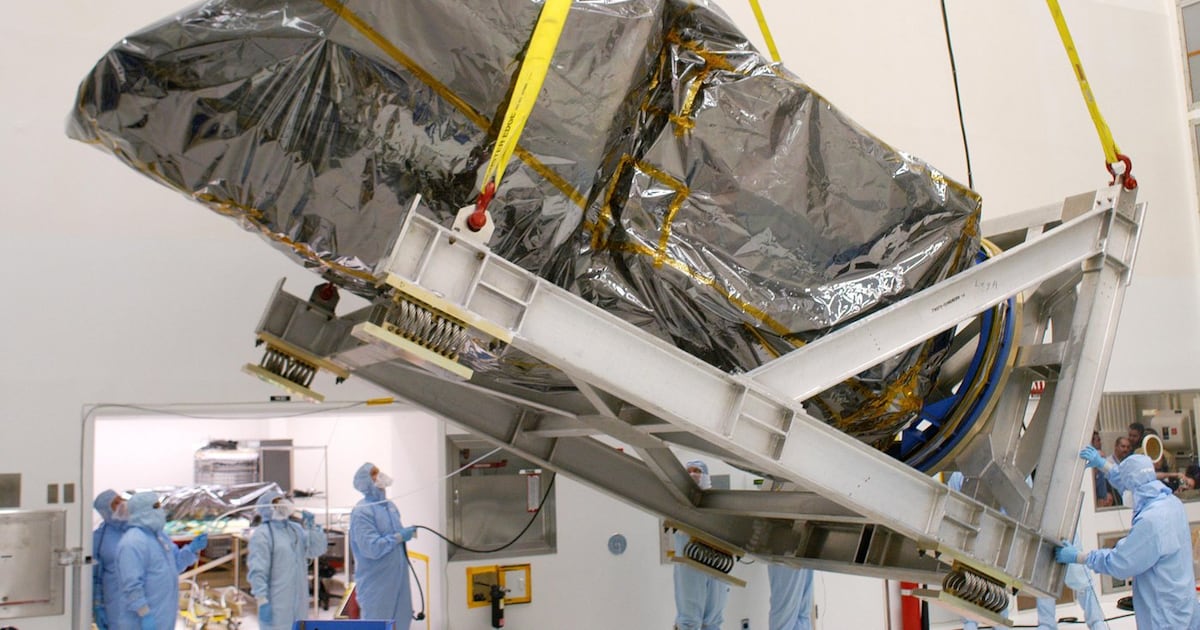
NASA's Swift Observatory Falls to Earth After 22 Years of Cosmic Study
A prominent NASA space telescope completed its final journey on Wednesday, plunging back into Earth's atmosphere after more than two decades spent observing powerful explosions across the universe. The U.S. Space Force confirmed the reentry of the Swift Observatory near Indonesia following a steady decline in its orbit driven by recent intense solar activity.
Launched in 2004, the 1.5-ton Neil Gehrels Swift Observatory was originally designed for a two-year mission to study gamma-ray bursts and exploding stars. Instead, the spacecraft operated for 22 years—lasting 11 times longer than initially planned—and acted as an early-warning observer for other telescopes. Operations officially concluded after the spacecraft reached the point of no return, leading to its shutdown on October 20.
The spacecraft's descent followed an unsuccessful private rescue attempt. NASA previously contracted Katalyst Space to execute an orbit-boosting mission, but the robotic craft encountered issues following its July launch and crashed in September. While much of the 1.5-ton observatory was expected to burn up during atmospheric entry, space agencies noted that some denser components likely survived and fell into the ocean.
Following the Swift telescope's reentry, NASA is turning its attention to the aging Hubble Space Telescope, which faces similar orbital decay from solar storms. Space officials are currently gathering input from private companies to explore potential options for boosting Hubble's orbit, upgrading its systems, or managing a controlled reentry before it eventually reenters the atmosphere by the mid-2030s.
