
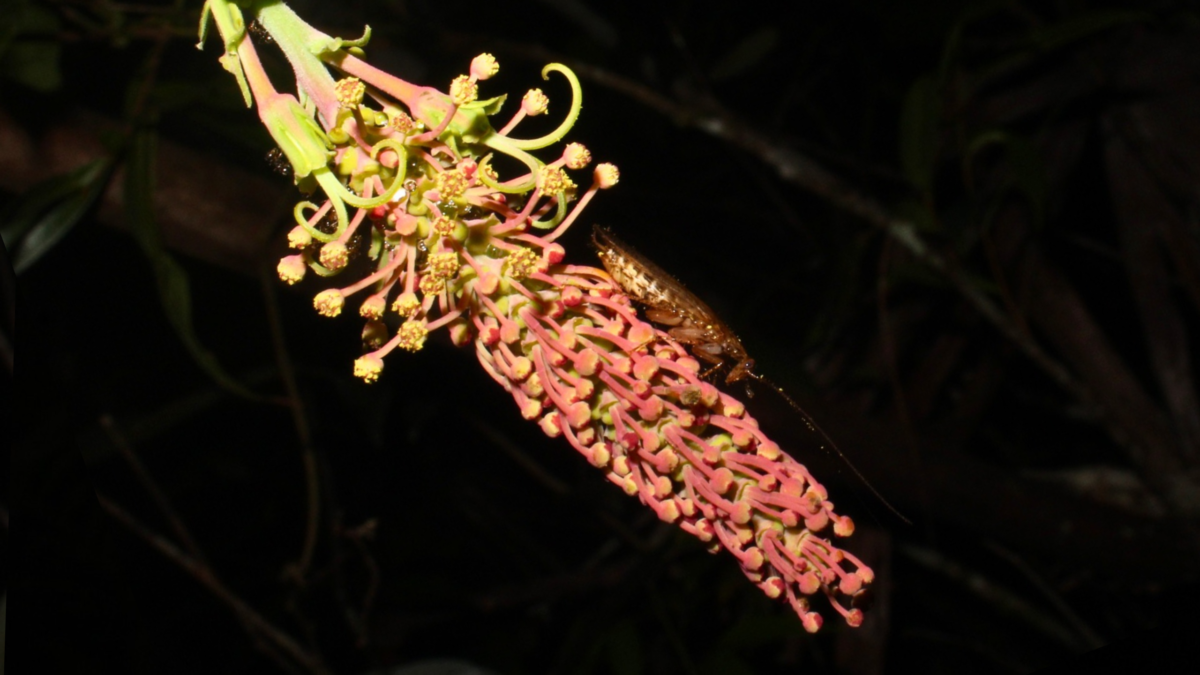
A new study conducted in the Brazilian Amazon has identified a surprising role for cockroaches: acting as essential pollinators for a rare shrub species. While most pollination research focuses on bees and bats, researchers found that wild cockroaches are vital to the reproductive success of Mabea uleana, a plant found in the Amazonas state.
The Night Shift
Botanists from the National Institute of Amazonian Research spent 252 hours observing the shrubs near Manaus between June 2024 and January 2025. They discovered that the plant’s flowers open at dusk, producing nectar that attracts nocturnal visitors. Unlike household pests, these wild cockroaches navigate the flower clusters to feed, inadvertently collecting sticky pollen on their legs and bellies. As they move between male and female flowers, they effectively transfer pollen, facilitating fruit production.
The study, published in the Brazilian Journal of Botany, highlights that cross-pollination is critical for this species. Experiments showed that 93 percent of flowers pollinated with pollen from a different shrub successfully formed fruit, compared to only 15 percent when self-pollinated. Flowers left open to natural visitors, including the cockroaches, achieved a 73 percent success rate.
Beyond the Usual Suspects
While daytime visitors like stingless bees also contribute to the plant's pollination, the research underscores the importance of nocturnal activity in the Amazonian ecosystem. Botanist Tulio Alex Martins-Silva noted that the role of cockroaches in plant reproduction has been largely overlooked, as scientific attention is typically directed toward more charismatic pollinators.
The researchers suggest that because cockroaches are highly sensitive to light and human presence, their actual contribution to the ecosystem may be even greater than the 18 visits recorded during the study. The findings provide new insight into the complex, often hidden interactions that sustain biodiversity in nutrient-poor Amazonian environments.
