
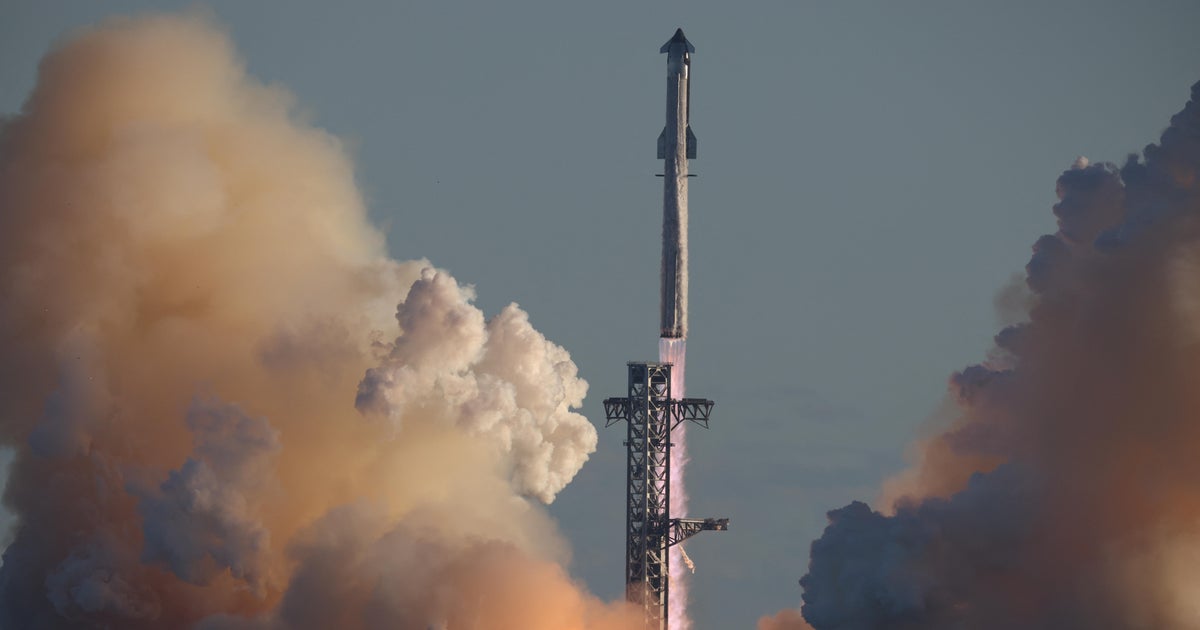
SpaceX Launches 15th Starship Test Flight to Advance Full Reusability
SpaceX launched its massive Starship rocket on its 15th test flight on Friday from the company's Starbase launch site on the Texas Gulf Coast. The milestone 22-hour mission was designed to test full reusability for an orbit-class rocket by attempting planned launch pad catches for both the Super Heavy booster and the Starship upper stage.
Lifting off at 5:47 p.m. ET, the 236-foot-tall first stage powered away using its 33 Raptor engines. While the booster initially performed as expected, separating about two minutes and 20 seconds into the flight, an undisclosed technical problem prompted flight controllers to divert its return. Instead of a planned mechanical arm catch at the launch gantry, the booster splashed down off the Texas Gulf Coast, ending in a fireball moments before hitting the water. The cause of the diversion was not immediately known.
Despite the booster setback, the 171-foot-tall Starship upper stage successfully reached space, coasted for 18 minutes, and fired a single Raptor engine to enter its planned orbit. The spacecraft was also scheduled to deploy upgraded Starlink internet satellites and complete the remainder of its multi-hour mission ahead of a planned upper-stage launch pad capture attempt in Texas.
Achieving full reusability is viewed as a major goal for SpaceX to enable rapid, aircraft-like flight cadences. NASA is also monitoring the vehicle's development as part of plans for future lunar crew landings, though agency officials have noted alternative options depending on readiness timelines.
