
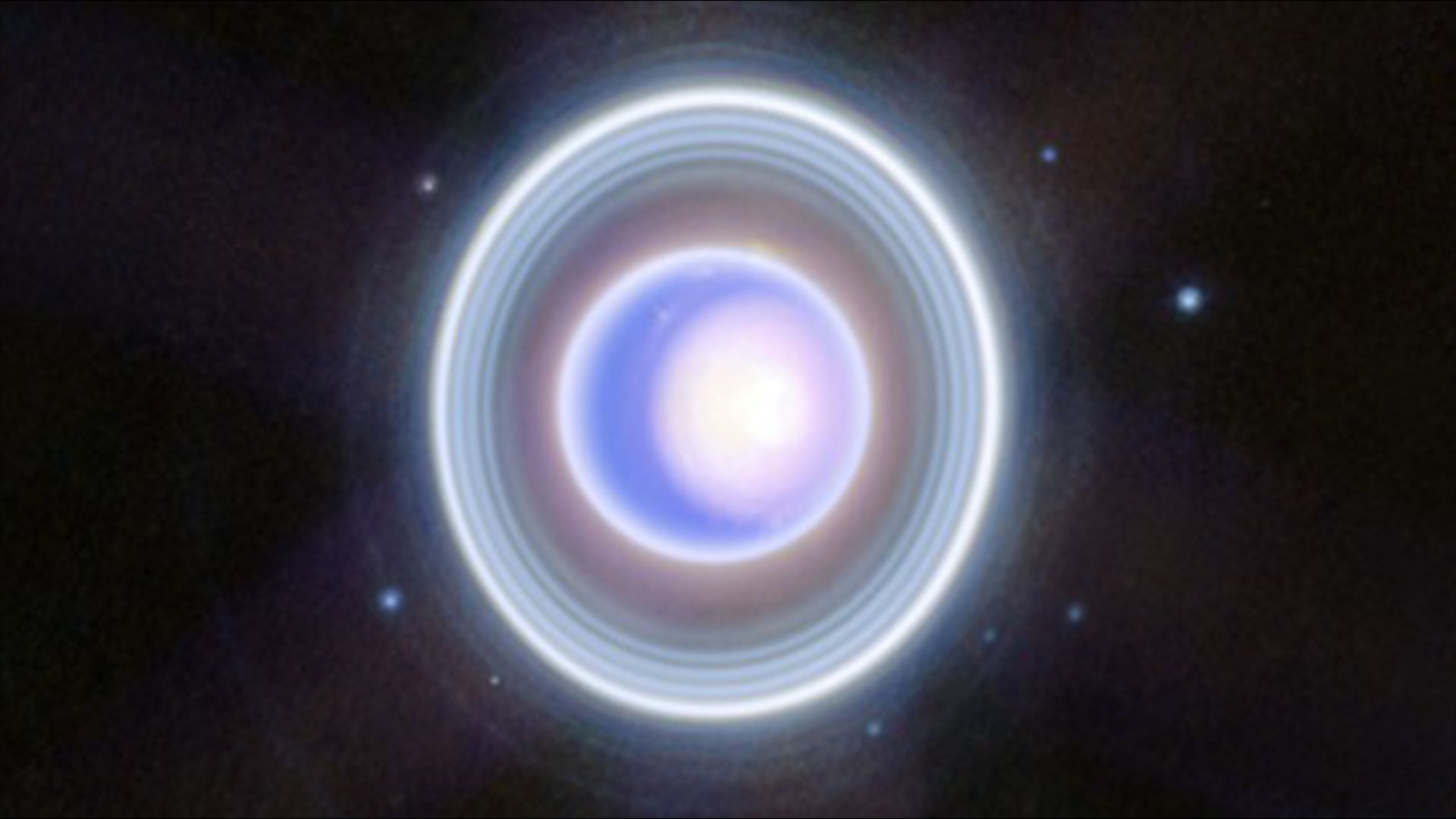
Stargazers have a prime opportunity to spot one of the solar system's most elusive planets. Uranus reaches its annual opposition on Wednesday, November 25, bringing the distant ice giant to its closest point to Earth for the year and making it appear at its brightest.
Opposition officially occurs at 6 p.m. EST when Earth passes directly between Uranus and the sun. During this celestial alignment, the seventh planet rises in the east around sunset, climbs to its highest point in the night sky near midnight, and sets in the west around sunrise. Skywatchers can locate it within the constellation Taurus, positioned a few degrees southeast of the Pleiades star cluster and roughly two-fifths of the distance toward the bright star Aldebaran.
While Uranus shines at a magnitude of +5.6—technically rendering it visible to the naked eye under exceptionally dark skies—astronomers recommend using stargazing binoculars or a backyard telescope to spot it reliably. Viewed through adequate magnification, the planet appears as a distinct tiny blue-green disk, a coloration caused by atmospheric methane absorbing red wavelengths of sunlight.
