
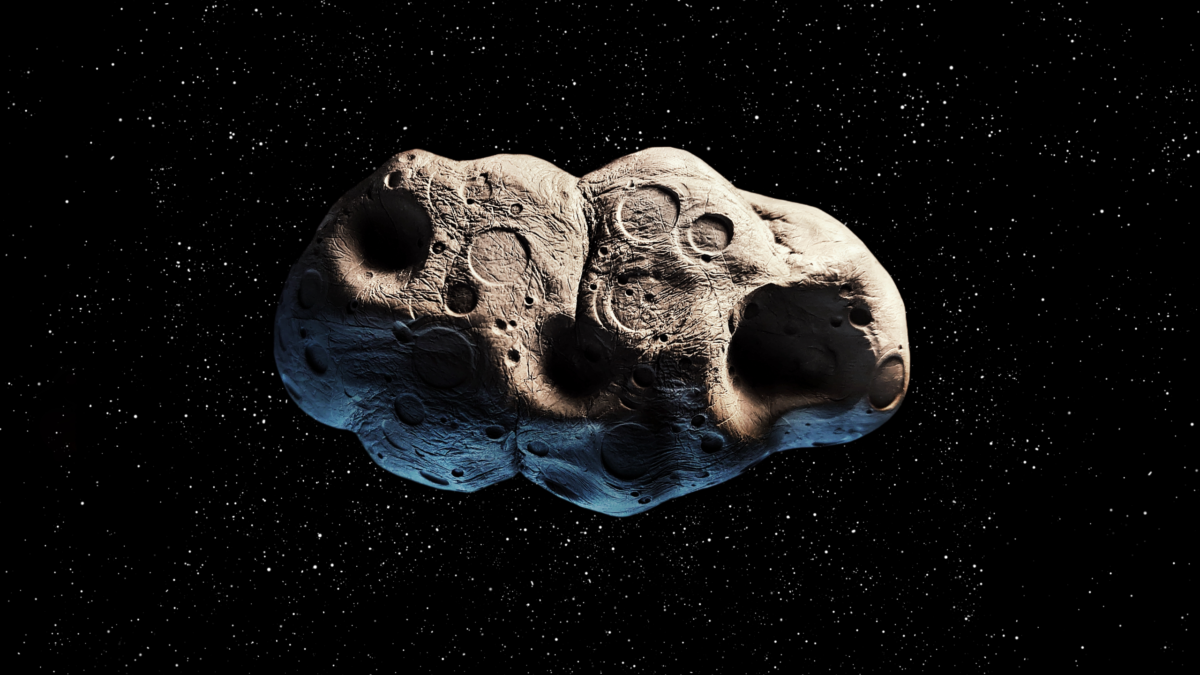
Most asteroids follow predictable paths through space, gracefully pushed and tugged by gravity and solar radiation pressure. However, the 11-meter (36-foot) space rock known as KY26 is defying these expectations. This small asteroid exhibits an unusual acceleration, leaving scientists searching for an explanation.
The 'Dark Comet' Hypothesis and Its Flaws
To explain the unexpected movement, researchers previously considered whether KY26 might actually be a 'dark' comet, whose undetectable outgassing is steering it along a different path. These objects are theorized to spew out gases just like ordinary comets, providing an extra push while maintaining the appearance of a standard asteroid.
To test this, aerospace engineers Korbin Hansen and Masatoshi Hirabayashi of the Georgia Institute of Technology evaluated the space rock. However, they found a problem with the explanation: the 11-meter (36-foot) space rock is too warm to retain the ice needed to power propulsion.
Too Warm for Survival
The researchers determined that the asteroid's temperatures are too high to support the ice required for cometary outgassing. Because the object is too warm to hold onto the necessary ice, scientists are running out of explanations for its behavior.
With internal ice struggling to account for its movement, scientists are considering other possibilities. External forces, such as radiation pressure from the Sun, could potentially exert a sufficiently powerful force that it could be responsible for the asteroid's apparent delinquency.
What Lies Ahead for KY26
The great news is that we may find out for certain very soon. The Japanese space agency's Hayabusa2 spacecraft is making its way toward KY26 even as you read these words, with a rendezvous slated for July 2031. Accelerate all you want, KY26. You can't hide forever. The research has been published in Icarus.
