
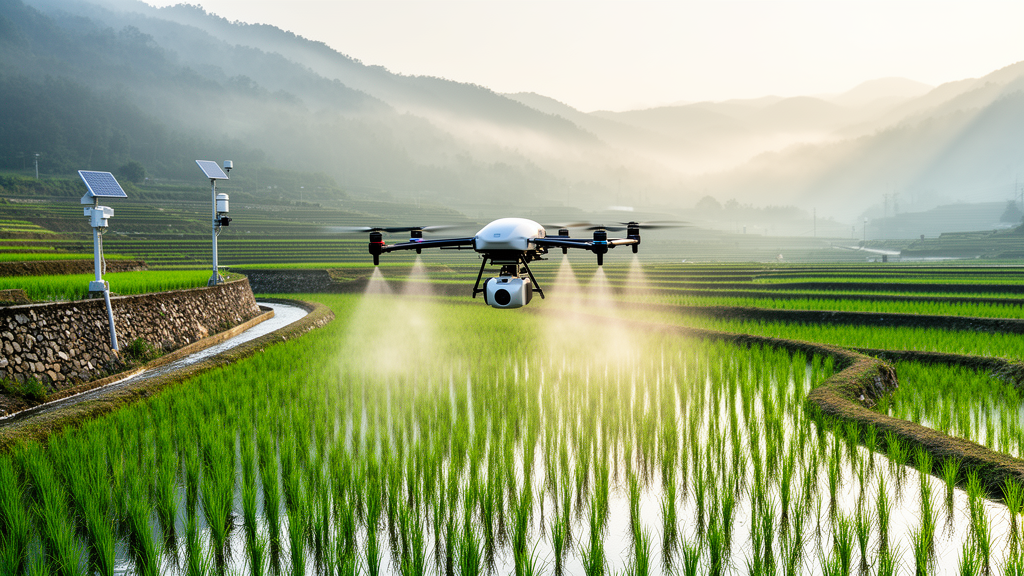
Artificial Intelligence Boosts Agricultural Efficiency in Chinese Provinces
A recent study has shed light on the significant impact of artificial intelligence (AI) on agricultural ecological efficiency in China. The research, published in Frontiers in Sustainable Food Systems, reveals that AI has contributed to a substantial increase in agricultural ecological efficiency (AEE) across 31 Chinese provinces between 2005 and 2023.
The Role of AI in Agricultural Efficiency
Agricultural ecological efficiency is a crucial metric that evaluates the sustainability of food systems by considering both economic performance and environmental impact. Unlike traditional productivity measures, AEE takes into account resource consumption, such as water, energy, and land, alongside undesirable outputs like carbon emissions and agricultural non-point source pollution. The study employed a slack-based measure (SBM) model to assess these efficiencies, allowing for non-proportional adjustments in inputs and outputs.
AI's Impact on Agricultural Efficiency
The researchers found that for every 0.1-unit increase in regional AI development, there is an average increase of 0.01078 units in AEE. This suggests that AI has facilitated a shift toward more precise factor allocation and environmentally sustainable outcomes. By integrating AI into agricultural production processes, farmers can optimize resource use, reduce waste, and minimize environmental costs.
Transmission Mechanisms
The study identified two primary transmission mechanisms through which AI enhances AEE: green finance and industrial structure upgrading. AI improves information collection and risk assessment capabilities, reducing information asymmetry that hinders green agricultural projects. This leads to a more efficient allocation of capital toward sustainable agricultural practices, such as water and fertilizer conservation. Additionally, AI facilitates the growth of knowledge-intensive and service-oriented sectors within the agricultural economy, including digital logistics, technical consulting, and intelligent agricultural machinery maintenance.
Threshold Effect
The research also reveals a significant threshold effect associated with agricultural technological innovation. When AI-driven technological innovation falls below a critical threshold of 2.3465, the positive effect of AI on AEE is present but more moderate. However, once this threshold is surpassed, the positive influence of AI on AEE strengthens by approximately 16.7 percent.
Regional Variations
The study found that the positive effect of AI on AEE is more pronounced in the eastern and northeastern provinces, where digital infrastructure and industrial conditions are relatively robust. Interestingly, the effect is also statistically stronger in regions characterized by lower initial levels of urbanization and agricultural modernization.
Conclusion
The study provides empirical evidence for the role of digital transformation in green agricultural development. As AI continues to integrate into agricultural production processes, it is likely to play an increasingly important role in promoting sustainable agricultural practices and reducing environmental costs. The findings of this study have significant implications for policymakers and agricultural stakeholders seeking to promote sustainable agricultural development in China and beyond.
