
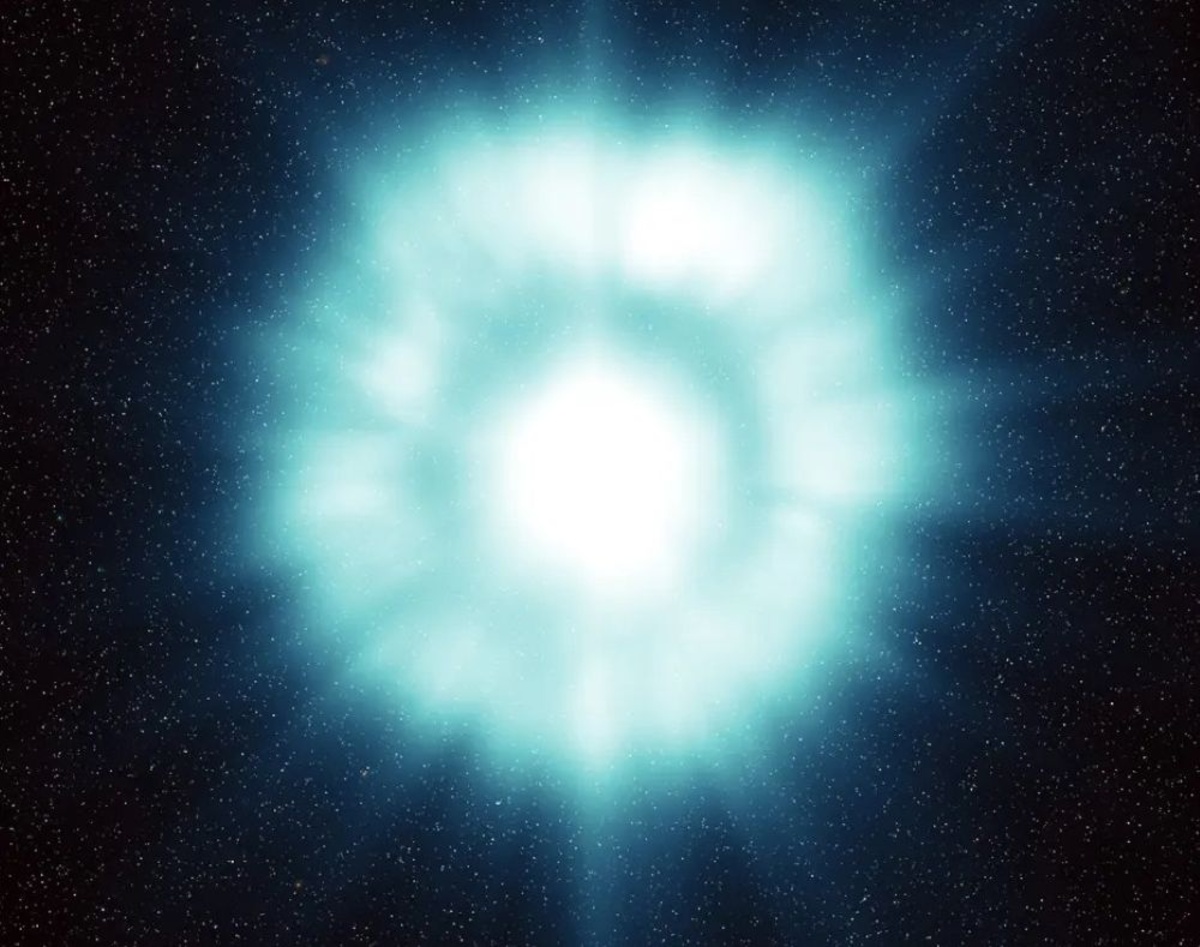
Astronomers and space researchers are closely examining a fascinating celestial event following recent observations of a high-energy cosmic explosion. The event, designated as gamma-ray burst GRB 261114A, caught the attention of the scientific community after exhibiting an unusual optical behavior that defies standard fading expectations.
Detected by the SVOM satellite, the burst triggered immediate follow-up observations. While initial tracking is typical for such energetic outbursts, the progression of this particular event quickly took an unexpected turn.
The SVOM Satellite Detection and Initial Observations
Typically, the optical and X-ray afterglows of gamma-ray bursts experience a steady, predictable decline in brightness over time as the expanding fireball interacts with surrounding interstellar medium. However, tracking data submitted to NASA-hosted circulars revealed that GRB 261114A did not follow this standard decay curve.
An Unexpected Plateau at 5,000 Seconds
Approximately 5,000 seconds after the initial satellite trigger, the optical afterglow of GRB 261114A abruptly stopped fading. Instead of continuing its descent into darkness, the light curve formed a noticeable plateau, maintaining a steady brightness level that puzzled researchers monitoring the data feeds.
This plateau represents a significant deviation from typical gamma-ray burst behavior, pointing toward an active underlying energy source or complex physical mechanics occurring within the explosion's remnants.
Unanswered Questions and Leading Hypotheses
As researchers continue to analyze the incoming data, several key pieces of information remain absent, leaving the exact mechanism up for debate:
- No Redshift Measurement: Astronomers have yet to report a definitive redshift value, making it difficult to determine the exact distance of the host galaxy and the intrinsic energy of the burst.
- Missing X-ray Afterglow: Unlike many well-studied bursts, a corresponding X-ray afterglow has not been documented alongside the optical plateau.
Because of these missing diagnostic clues, the precise cause of the stalled fading remains open. Astrophysicists are currently weighing a few primary theoretical models to explain the plateau:
- Magnetar Energy Injection: A newly born, rapidly rotating neutron star with an extremely strong magnetic field could be continuously pumping energy into the blast wave.
- Structured Jets: The geometry of the relativistic jets might feature different angular energy profiles that alter the observed light curve as different sections come into view.
- Layered Ejecta: Shells of material ejected at varying speeds could be colliding with one another, producing sustained secondary radiation.
Scientific Implications
Events like GRB 261114A highlight the ongoing value of rapid-response satellite missions like SVOM in catching transient cosmic phenomena in real time. While the lack of a redshift and X-ray counterpart leaves key questions unanswered for now, the captured optical plateau provides theorists with valuable constraints as they work to model the complex engines driving some of the universe's most powerful explosions.
