
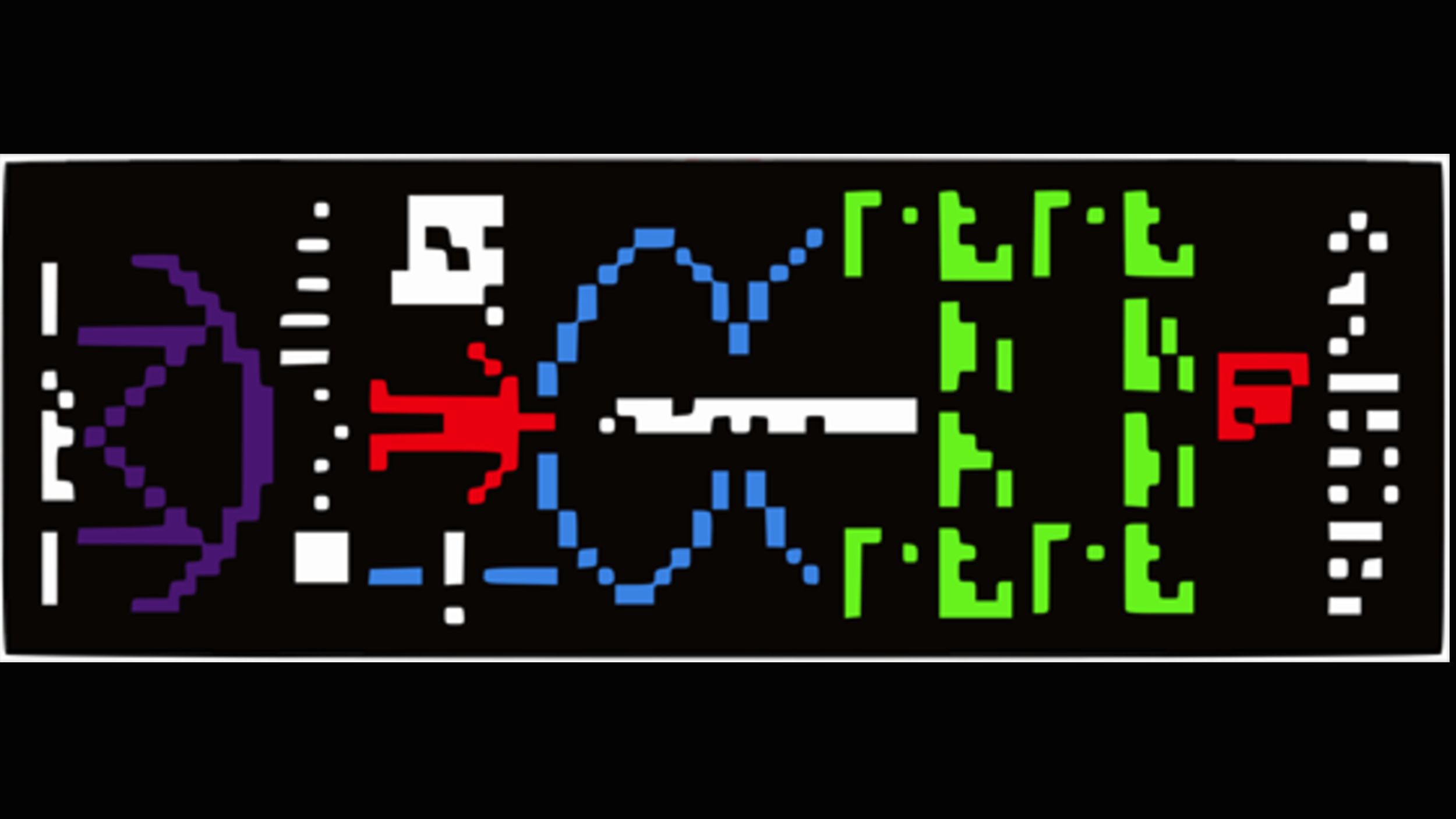
On November 16, 1974, humanity made its first deliberate attempt to reach out to potential extraterrestrial intelligence. Using the world's largest radio telescope at the time, scientists transmitted a powerful interstellar message into deep space from the Arecibo Observatory in Puerto Rico.
This historic broadcast marked a major milestone in humanity's search for life beyond Earth, serving as our very first intentional olive branch to the stars.
Transmitting from the Arecibo Observatory
The ambitious project utilized the immense capabilities of the Arecibo Observatory in Puerto Rico. At the center of the broadcast was Arecibo's 305-meter antenna attached to a megawatt transmitter. According to the SETI Institute, the emission was equivalent to a staggering 20 trillion-watt omnidirectional broadcast. This made it the most powerful signal ever beamed into space at that time, strong enough to be detected by a similar receiving antenna almost anywhere in the galaxy.
The message itself was designed by Cornell University astronomy professor Frank Drake—creator of the famous Drake Equation for alien life—alongside Cornell graduate students Richard Isaacman and Linda May, Arecibo staff member James Walker, and renowned astronomer Carl Sagan, among others.
Decoding the Binary Message
The transmission lasted less than three minutes and consisted of 1,679 bits arranged in 73 lines of 23 characters per line. Because 73 and 23 are both prime numbers, any intelligent recipients would theoretically recognize the deliberate mathematical structure.
The binary code was packed with fundamental information about Earth and its inhabitants, including:
- Data concerning human DNA
- Figures depicting a human being
- Diagrams of our solar system
- A graphic representation of the Arecibo telescope itself
The Journey to the M13 Star Cluster
The signal was aimed directly at the M13 star cluster, a dense collection of stars located roughly 25,000 light-years away from Earth.
Because radio waves travel at the speed of light, the journey is an exceptionally long one. As of 2026, the message has traveled approximately 52 light-years, leaving it with about 24,948 light-years still to go before it reaches the M13 star cluster. If any extraterrestrial civilization hears and decodes the signal upon its arrival, a reply would take another 25,000 years to reach Earth.
While the Arecibo broadcast was humanity's first intentional radio message of its kind, it was not the last. Subsequent efforts to communicate with potential cosmic neighbors have included physical plaques and records placed aboard spacecraft like the Pioneer and Voyager probes, as well as NASA beaming a performance of "Across the Universe" by Paul McCartney into space in 2008.
