
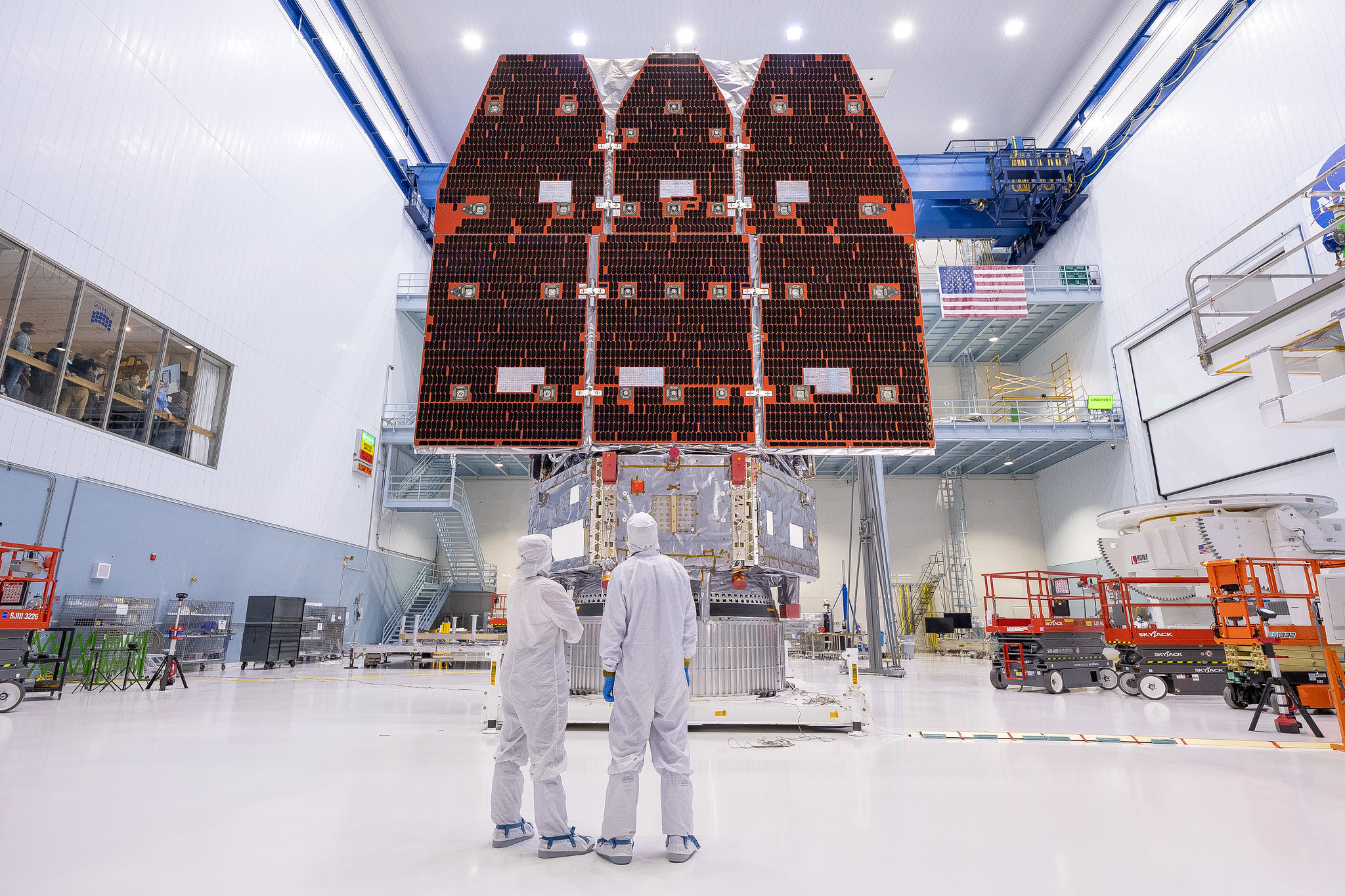
NASA is preparing to unveil the inaugural images from the Nancy Grace Roman Space Telescope, a milestone event scheduled for December 7. The reveal will take place during a live stream from the American Geophysical Union (AGU) Annual Meeting in San Francisco, beginning at 3:30 p.m. EST. These first images are expected to demonstrate the telescope's unique ability to capture expansive, high-resolution infrared views of the cosmos.
The mission has recently undergone a rigorous commissioning process, including the successful alignment of its optical instruments. This calibration is critical, as Roman’s program scientist Dominic Benford noted that the telescope requires stability at least ten times greater than that of the Hubble or Webb space telescopes to achieve its ambitious scientific objectives. As it nears its destination at the second Sun-Earth Lagrange point (L2), the observatory is preparing to enter its official science operations phase.
Exploring the Mysteries of the Universe
The Roman Space Telescope is designed to conduct deep, panoramic surveys that will provide new insights into some of the most complex phenomena in space. Its primary scientific goals include:
- Dark Energy and Dark Matter: Probing the history of the universe to understand the forces driving its expansion and structure.
- Exoplanet Research: Investigating worlds outside our solar system.
- Cosmic History: Using its large field of view to study vast regions of the sky, supporting a wide range of research beyond its core mission.
Public Engagement and Future Operations
Following the official reveal, NASA is inviting the public to view the images simultaneously on the agency’s website and via a live stream at nasa.gov/live. The mission is a collaborative effort managed by NASA’s Goddard Space Flight Center, with significant contributions from the Jet Propulsion Laboratory, Caltech/IPAC, and the Space Telescope Science Institute. Industrial partners, including BAE Systems, L3Harris Technologies, and Teledyne Scientific & Imaging, have played key roles in the telescope's development.
As the observatory settles into its quasi-halo orbit at L2—a vantage point nearly a million miles from Earth—it is positioned to provide years of unprecedented data. Recent technical assessments suggest the telescope is capable of operating for up to 22 years, significantly exceeding its initial design requirements.
