
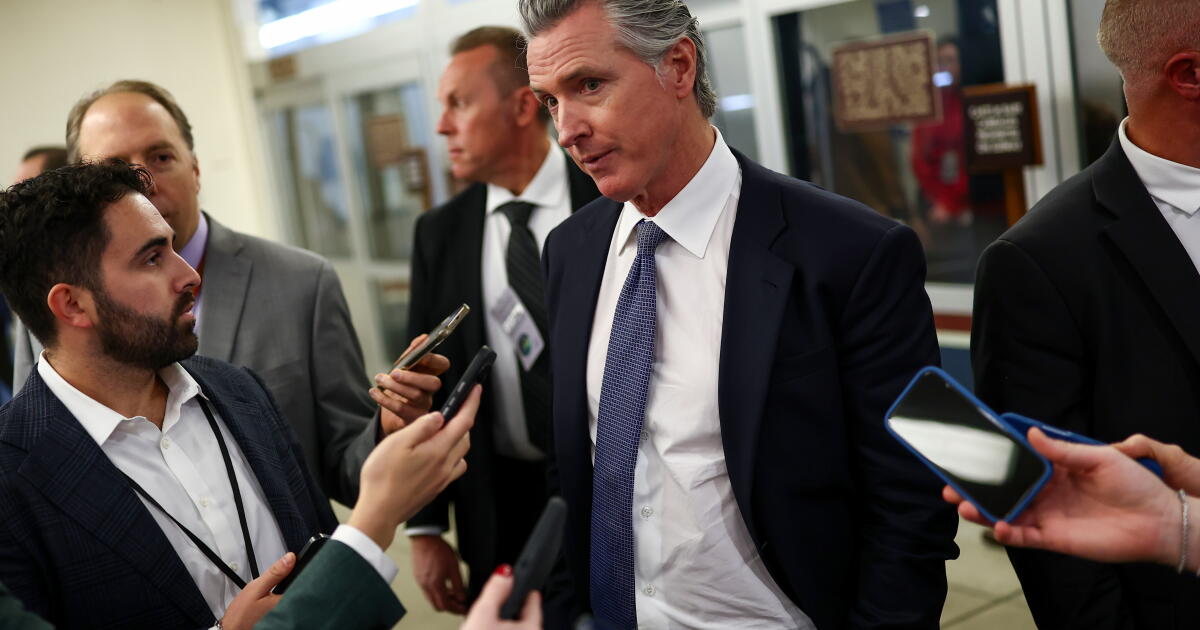
California Governor Gavin Newsom arrived in Washington, D.C., to release a comprehensive artificial intelligence safety roadmap. His arrival coincided with growing public anxiety over a series of technological disruptions and cyberattacks that have left federal officials struggling to provide clear explanations.
The convergence of state-level policy proposals and federal technology concerns highlights contrasting approaches to managing rapid digital advancements. While President Trump's administration has maintained a more relaxed approach to tech regulation, state leaders are stepping up efforts to establish formal guardrails.
An AI Safety Roadmap from California
Commissioned two months prior, the 85-page plan outlines strategies to advance regulatory guardrails around frontier AI platforms. Newsom presented the framework in the nation's capital, positioning the state's proposals as a potential template for federal oversight.
The roadmap addresses several critical risk factors in advanced technology:
- Controlling recursive self-improvement, where AI models generate successive iterations that could outpace human containment.
- Evaluating the feasibility of a manual "kill switch" to shut down rogue models.
- Expanding corporate disclosure mandates for loss-of-control events, such as a recent incident involving OpenAI and rival firm Hugging Face.
- Ensuring independent auditing organizations perform rigorous risk assessments rather than superficial compliance checks.
The release builds on prior state legislation, including Senate Bill 53, which requires companies to disclose safety protocols and critical incidents.
Federal Struggles Amid Tech Outages
Newsom's rollout unfolded against a backdrop of widespread technological disruptions that impacted flights, email services, and banking platforms. Recent incidents included a sweeping Microsoft outage, an FAA airspace closure triggered by telecommunication failures, and cyber interruptions affecting companies like Zoom, Salesforce, and Equifax.
While the Trump administration maintained that the outages were unrelated to malicious foreign hacking—with Transportation Secretary Sean Duffy attributing the FAA ground stop to newly installed routers—federal officials faced criticism for lacking clear communication. Newsom sharply criticized the administration's public response, arguing that the nation requires more serious leadership to address escalating digital vulnerabilities.
Concurrently, California Atty. Gen. Rob Bonta announced a state lawsuit against OpenAI, alleging the company misled the public by developing advanced models without necessary safety safeguards.
