
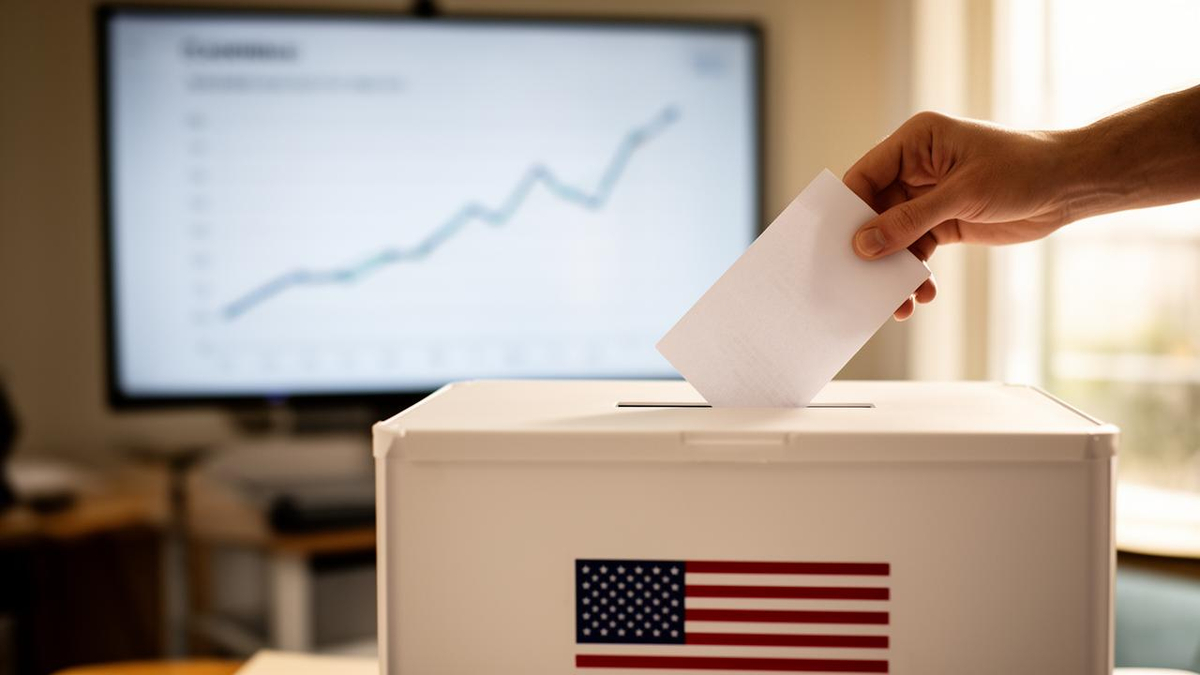
As the U.S. midterm elections approach on November 3, financial markets are closely evaluating how upcoming legislative shifts could impact global equities. Rather than the election outcome itself, many investors are focused on the political gridlock anticipated to follow. Historically, this post-election stalemate has often served as a stabilizing force for stocks, with international markets like South Korea potentially following a similar trajectory as U.S. political risks subside.
The upcoming midterms function essentially as a referendum on the second year of the presidential term. All 435 seats in the House of Representatives and 35 of the 100 Senate seats are up for election. The Republican Party, led by President Donald Trump, currently holds a narrow advantage with 53 seats in the Senate, while roughly 25 to 30 House districts and about seven Senate races remain genuinely competitive. Data from the prediction platform Polymarket indicates a high probability for Democrats to win the House at roughly 92%, with a 65% chance of taking both chambers.
