
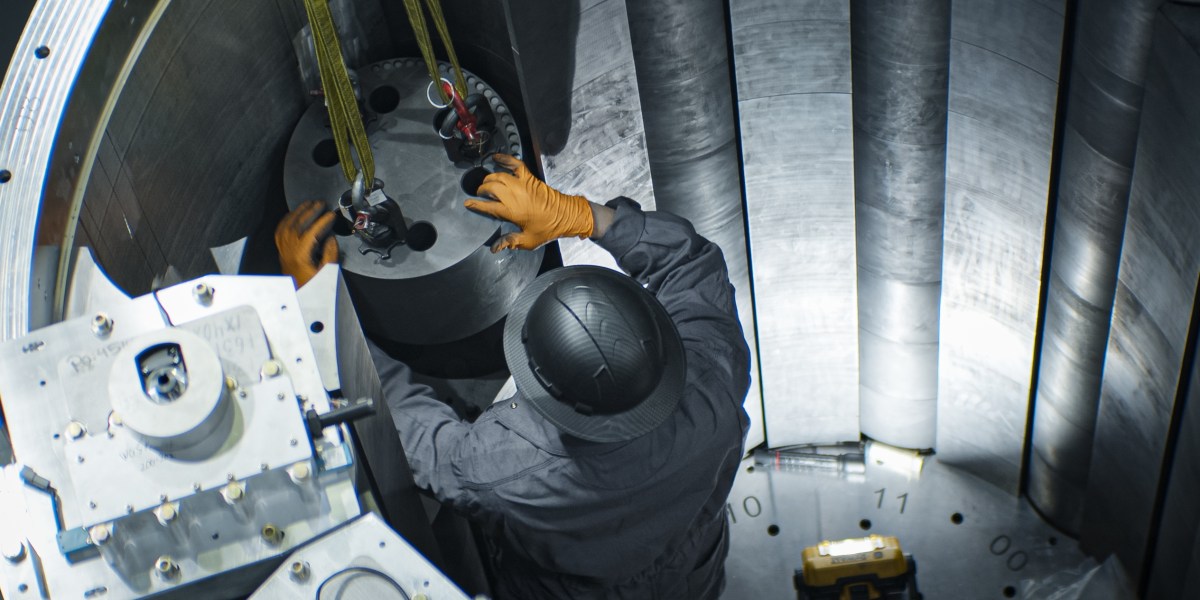
As the demand for high-powered computing and advanced defense capabilities grows, the United States military and NASA are shifting their focus toward a new frontier in energy: microreactors. While the broader tech industry explores nuclear energy to support the artificial intelligence boom, these smaller, transportable fission systems are being developed to provide reliable, long-term power in environments where traditional grids or fuel supplies are unavailable.
The transition toward these compact power sources is being accelerated by government-backed initiatives, most notably Project Janus. By moving beyond laboratory testing and into field deployment, these organizations aim to prove that nuclear fission can serve as a stable, meltdown-proof, and agile solution for both terrestrial defense and deep-space exploration.
Advancing Microreactor Technology
The technology is designed to address the logistical vulnerabilities of traditional power sources. For instance, Radiant, a major recipient of Project Janus funding, has developed the Kaleidos system. This 1-megawatt unit is compact enough to occupy only three parking spaces and is capable of powering approximately 750 homes. Unlike diesel generators, which require frequent refueling and create predictable, vulnerable supply lines, these reactors are designed to operate for up to three years without needing a fuel replenishment.
Powering the Future of Space Exploration
The utility of microreactors extends far beyond Earth’s atmosphere. Jordan Bramble, CEO of Antares, emphasizes that fission is the most viable path for sustaining high-powered operations in orbit and on other celestial bodies. The company is already developing the R1-S, a space-hardened variant of its reactor, with the goal of deployment on the moon as early as 2030.
This capability is considered essential for future deep-space missions. Exploring the icy moons of Jupiter, Saturn, and Neptune—such as Europa, Enceladus, and Triton—will require significant, consistent power to search for signs of microbial life beneath their surfaces. Fission power provides the necessary baseload energy to support these complex, long-duration missions where solar power may be insufficient or unreliable.
Strategic Implications for Defense
On the ground, the U.S. military is prioritizing these reactors to protect critical infrastructure from grid failures and to enhance the mobility of deployed forces. By reducing reliance on fuel convoys, which have historically been prime targets for adversaries, the military aims to increase the survivability and independence of its overseas units.
While the technology shows promise, its long-term success depends on proving its reliability through commercial and military field applications. As Project Janus continues to distribute billions in awards to companies like Radiant, General Atomics, and Antares, the focus remains on transitioning these reactors from experimental designs to essential components of national security and space exploration infrastructure.
