
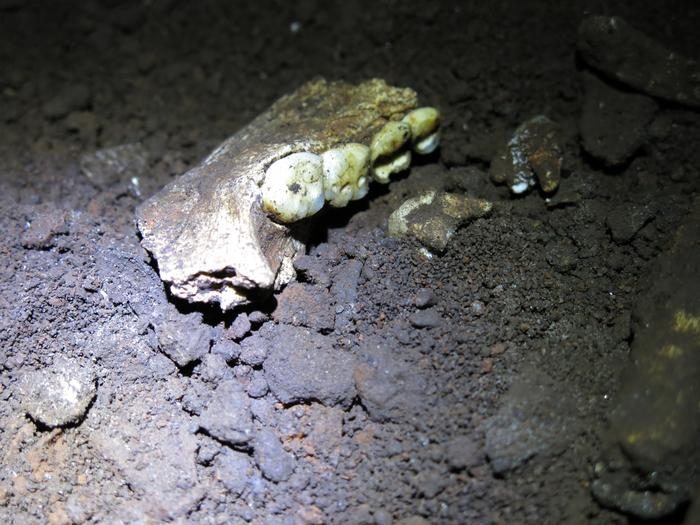
A recent scientific study has uncovered a bizarre new detail regarding Homo naledi, an ancient human species that lived approximately 300,000 years ago in South Africa. Protein analysis of fossilized tooth enamel from at least 20 individuals found deep inside the Rising Star Cave system has revealed that every single tested specimen is female.
Discovered initially by cavers in 2013 in the Cradle of Humankind and officially described in 2015, Homo naledi remains an evolutionary puzzle. The species possessed archaic physical traits typical of much older hominins like Australopithecus, yet lived at the same time as the earliest modern humans, Homo sapiens. Furthermore, researchers have long debated how the remains ended up deep within the narrow, hard-to-access chambers of the Rising Star Cave system.
To determine the sex of the fossils, researchers worked with paleoproteomics specialists from the University of Copenhagen and the Max Planck Institute of Biochemistry. Using a minimally destructive acid etching technique on 23 teeth representing at least 20 individuals, the team analyzed peptide samples for amelogenin proteins. While both sexes carry the AMELX marker, only males carry the AMELY marker. Across all samples, no AMELY was detected.
According to the study's authors, the statistical odds of finding an all-female group of 20 individuals by chance from a 1:1 population ratio are less than one in one million (0.0000954%). Co-author Lee Berger suggests this extreme female bias supports the controversial hypothesis that Homo naledi engaged in deliberate death rituals that separated males and females. However, other scientists remain skeptical of intentional burial claims, proposing alternative explanations such as the founder effect—where a small, isolated splinter population experienced reduced genetic diversity—or other behavioral factors.
