
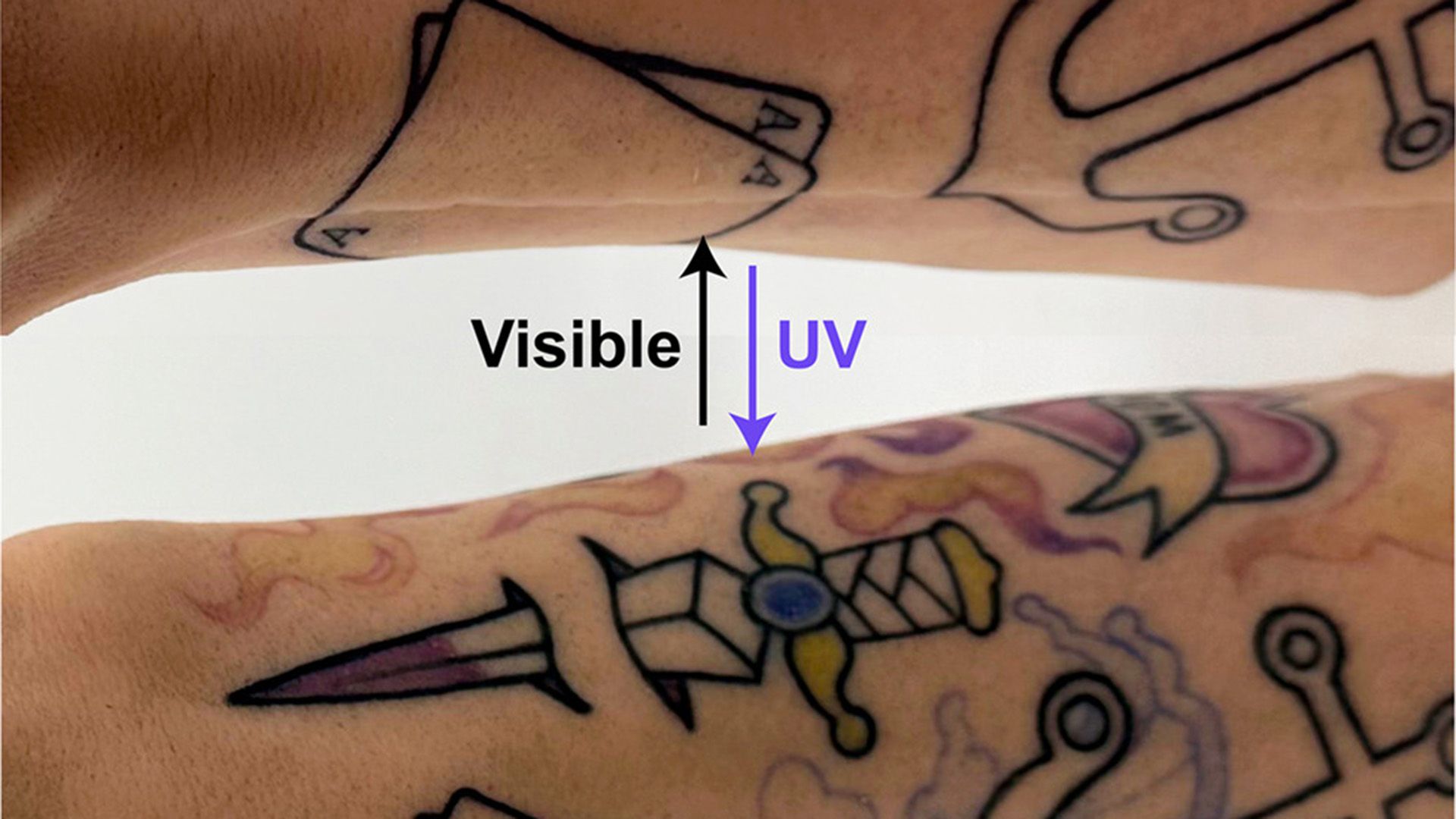
Researchers at the University of Colorado Boulder have developed a novel type of tattoo ink that can be switched on and off using light, offering a potential alternative to conventional tattoo removal. Published in the journal Matter & Light, the technology uses specialized compounds called photochromic dyes.
The system, known commercially as PhotoTat, relies on light-sensitive molecules encapsulated in nanoparticles of polymethyl methacrylate (PMMA)—a medical-grade plastic already used in bone cement, dentures, and dermal fillers. When exposed to a 365-nanometer ultraviolet (UV) LED for two to three seconds, the dye's molecular structure changes, shifting a colorless pigment into a visible color. A blast of bright white light or intense outdoor sunlight reverses the reaction, causing the color to disappear while the pigment remains embedded in the skin.
Led by study co-author and biomedical engineering associate professor Carson Bruns, the research team developed primary color inks including blue, magenta, and yellow. These hues can combine to form a variety of other colors and allow wearers to conceal or reveal specific portions of body art using different wavelengths of light.
While a red pigment version launched in 2024 via the biotech company Hyprskn, widespread general use remains a few years away. The inks still require comprehensive toxicity and safety testing before they can be cleared for commercial tattoo shops. Additionally, some technical hurdles persist, such as the blue ink degrading after a limited number of activations and direct sunlight potentially activating the pigments prematurely unless blocked by sunscreen.
Beyond cosmetic applications for people who want to hide tattoos for professional or personal reasons, researchers envision practical medical uses. The technology could be utilized for temporary or switchable clinical skin markers, such as alignment guides for radiation therapy, which can be made invisible once they are no longer required, sparing patients from permanent reminders of medical treatments.
