
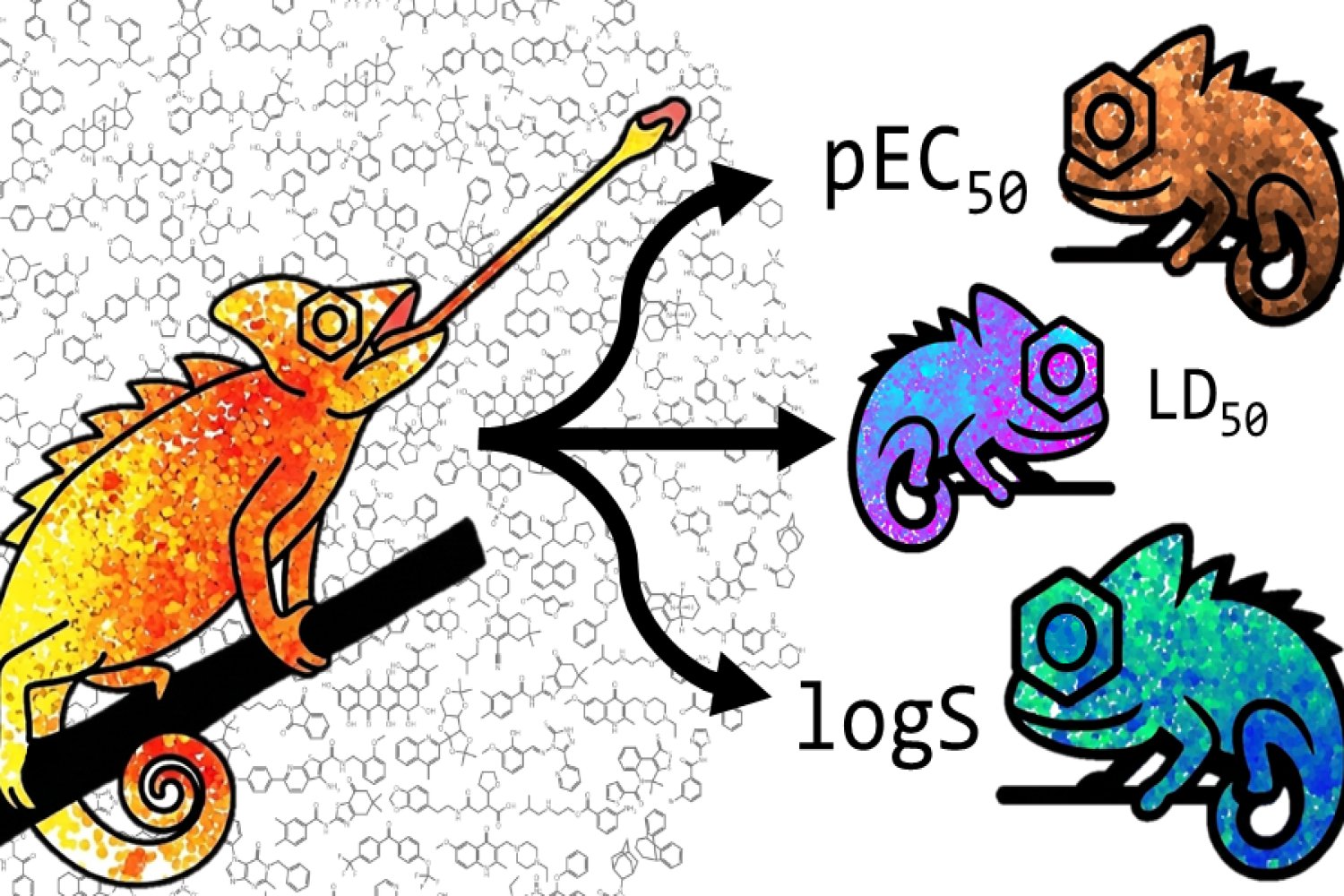
Researchers at the Massachusetts Institute of Technology (MIT) have developed a new machine-learning model called CheMeleon designed to predict the behavior and properties of molecules, particularly when experimental data is scarce.
The findings were detailed in the Journal of Chemical Information and Modeling by MIT graduate student Akshat Shirish Zalte, recent graduate Jackson Burns, Research Scientist Charlles Abreu, Professor William Green, and three researchers from the chemical company BASF. Although the peer-reviewed study was published in September, an earlier version of the open-source model has already seen practical adoption across several pharmaceutical companies and played a prominent role in an OpenADMET predictive contest earlier this year.
By pre-training on general chemical properties, CheMeleon can be fine-tuned using only a small number of data points for specific tasks, such as determining ligand affinities or solubility. Testing across 58 different cases showed the model outperformed existing foundation models and classical expert-driven approaches, helping to reduce the number of molecules that must be synthesized and tested in a laboratory setting.
