
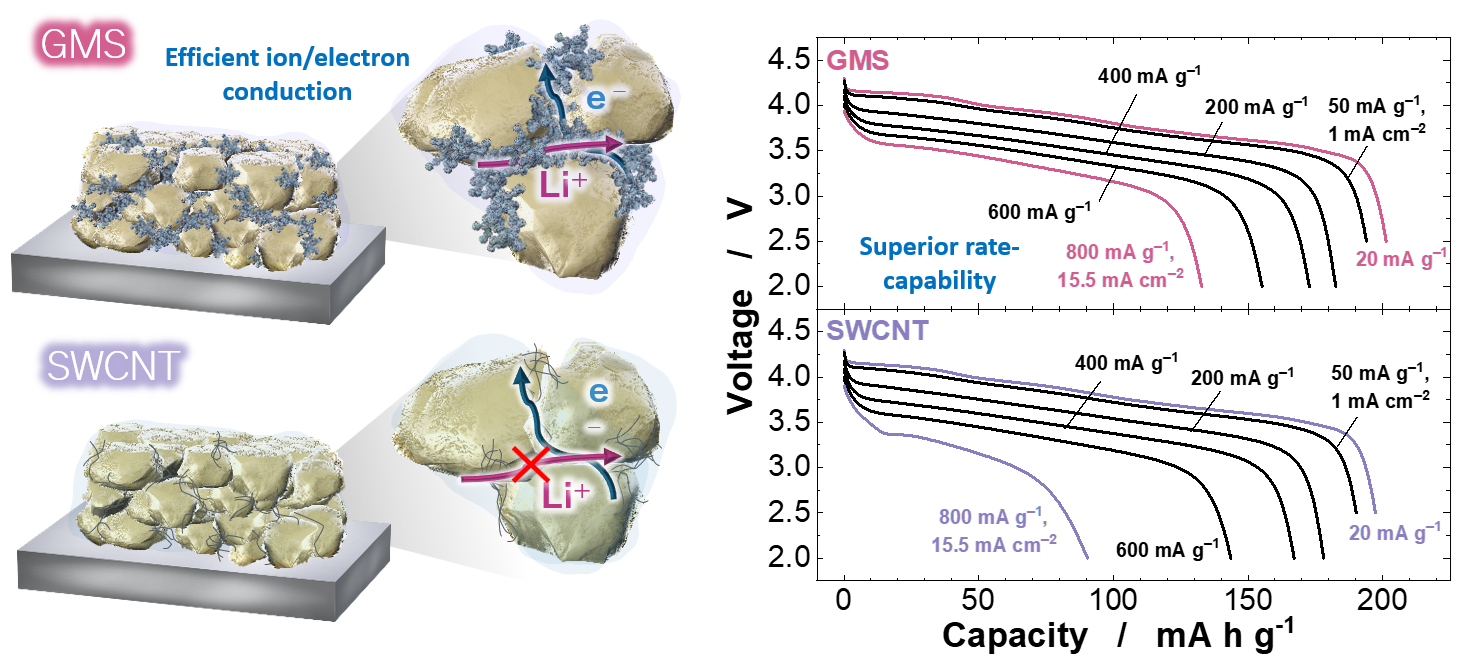
A research team led by Yokohama National University has developed a method to improve the energy and power density of lithium-ion batteries by incorporating a material known as graphene mesosponge (GMS). The findings, published in Advanced Energy Materials on October 8, 2026, offer a potential solution to the efficiency limitations inherent in high-capacity battery electrodes.
Overcoming Electrode Constraints
Modern lithium-ion batteries, which power everything from smartphones to electric vehicles, often struggle with a trade-off between energy density and performance. To increase energy capacity, manufacturers typically pack more active material into the positive electrode. However, reducing the amount of conductive additives and binders to make room for this material often restricts the flow of electrons and ions, leading to slower charging and discharging.
To address this, the research team—which included collaborators from Yonsei University and 3DC Corporation—compared graphene mesosponge against traditional additives like acetylene black and carbon nanotubes. They found that the unique, sponge-like mesoporous architecture of GMS creates a three-dimensional network that allows electrolytes to penetrate deeper into the electrode.
Improved Conductivity and Future Outlook
Using 3D imaging techniques, the researchers demonstrated that GMS facilitates more uniform electron and ion transport within densely packed electrodes. By enabling these particles to move more freely, the additive allows for higher energy density without sacrificing the battery's power capability.
Professor Naoaki Yabuuchi of Yokohama National University noted that this microstructural design is a transformative step for practical battery applications. The team’s ongoing research aims to integrate this technology with graphite negative electrodes to eventually achieve a combination of high energy density and rapid charging capabilities. The study was supported by the Japan Society for the Promotion of Science and the Japan Science and Technology Agency.
