
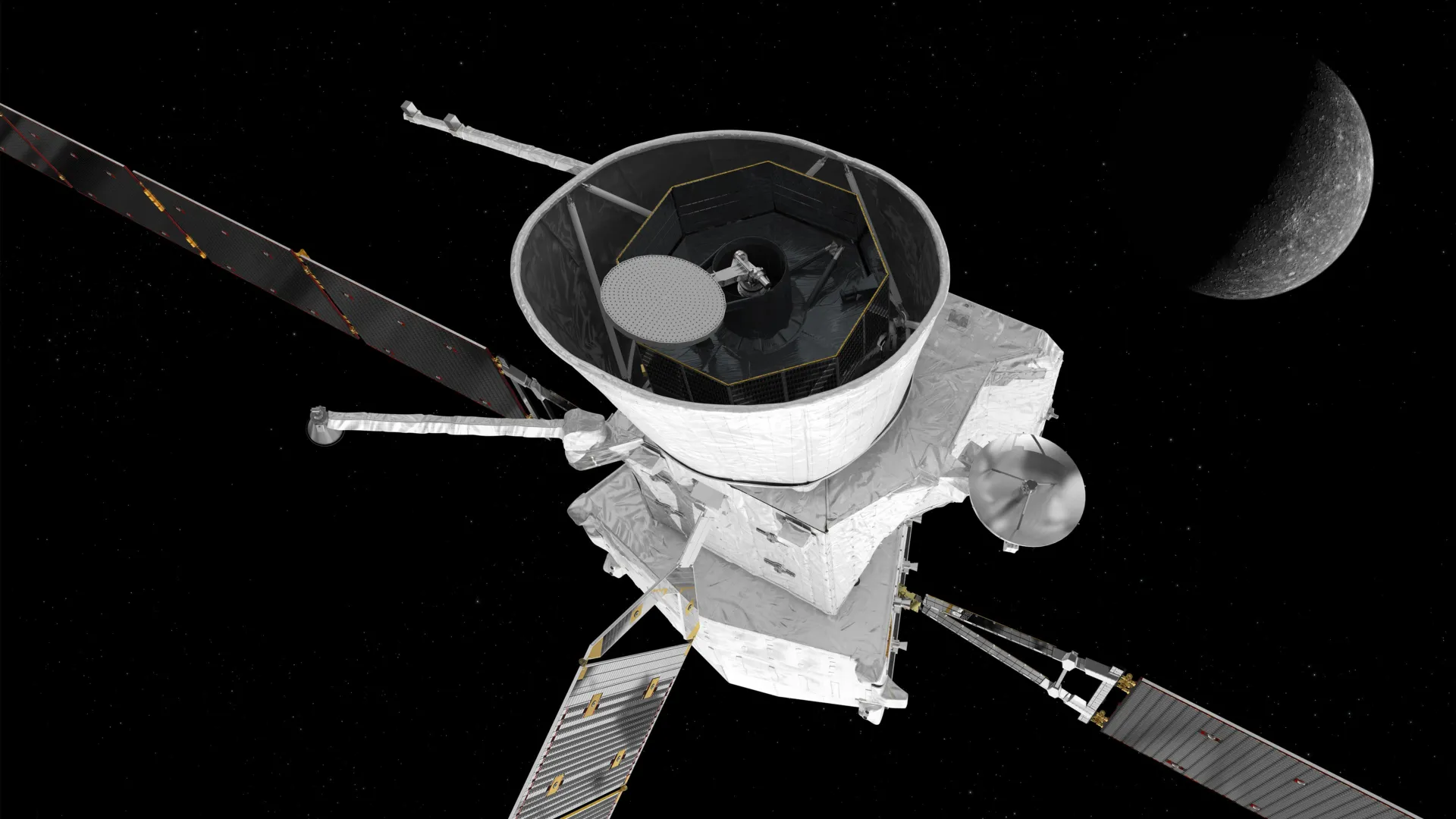
After an eight-year journey spanning 10 billion kilometers, a pioneering X-ray telescope has finally opened its eyes to the cosmos. The Mercury Imaging X-ray Spectrometer (MIXS), a key instrument aboard the European Space Agency (ESA) and Japan Aerospace Exploration Agency’s BepiColombo mission, successfully captured its first observations of the Crab Nebula. This milestone confirms that the delicate, UK-built technology has survived the harsh conditions of deep space and is ready to begin its primary mission upon reaching Mercury.
The opportunity to test the instrument arrived in September, following the separation of the Mercury Transfer Module (MTM) from the mission's two science orbiters: the Mercury Planetary Orbiter (MPO) and the Mercury Magnetosphere Orbiter (Mio). With its view finally unobstructed, the team at the University of Leicester could verify the health of the instrument before the spacecraft’s scheduled arrival at Mercury on November 21.
Testing Performance with the Crab Nebula
To ensure the telescope was functioning correctly, researchers pointed it toward the Crab Nebula, a well-studied remnant of an exploded star located 6,500 light-years away. Because the nebula emits a strong, predictable X-ray signal, it served as an ideal reference point for comparing current performance against laboratory data collected in 2015.
The calibration campaign, conducted over 39 hours on September 11 and 12, involved 55 controlled changes in the spacecraft's orientation. By analyzing how the X-ray signal spread across the detector, scientists measured the telescope's angular resolution—its ability to distinguish fine details. Remarkably, the instrument demonstrated slightly sharper resolution in space than it had during its final ground tests nearly a decade ago.
Instrument Health and Future Capabilities
Professor Emma Bunce, Principal Investigator for MIXS and Director of the Institute for Space at the University of Leicester, noted that the instrument is performing "fantastically well." Engineers confirmed that the detector has suffered no radiation damage during its long transit. While the team identified minor effects, such as self-fluorescence when the Sun illuminates the optics, these are well-understood and are not expected to interfere with the upcoming study of Mercury’s surface.
Preparing for the Science Phase
Following the arrival at Mercury on November 21, the mission will proceed with the separation of the two science orbiters in early December. The primary science phase is slated to begin in April 2027. During this time, MIXS will use its X-ray vision to map the chemical composition of Mercury’s surface and investigate how the planet’s magnetic environment interacts with its rocky exterior.
The development of MIXS was a collaborative international effort, with primary funding provided by the UK Space Agency, the Science and Technology Facilities Council (STFC), the European Space Agency, and the University of Leicester. As the spacecraft prepares for its final orbital insertion, the success of these initial observations provides a promising outlook for the discoveries that await at the solar system's innermost planet.
