
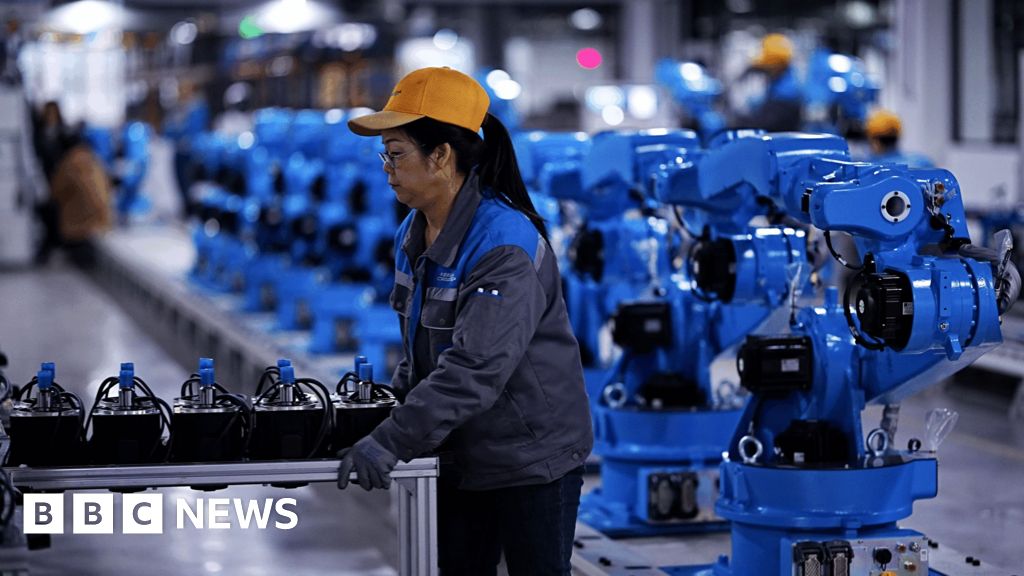
China is accelerating its push into automation and artificial intelligence, driven by state-backed initiatives to position the nation at the forefront of global technological innovation. Across the country, vocational schools and factories are working in tandem to integrate millions of machines into daily production lines, reflecting a national strategy supported by substantial financial investment.
This rapid shift highlights a broader economic transformation designed to address domestic demographic shifts while competing directly with international rivals like the US.
Vocational Training and the Next Generation of Engineers
Institutions such as the Hangzhou Technician Institute are at the center of this industrial pivot, preparing young students to enter a workforce heavily shaped by automation. Instructors update their curricula by observing factory floors firsthand to ensure students learn relevant programming and robotics skills.
Programs range from industrial robotics and medical instrument development to specialized engineering disciplines. Educators note that students trained in these technical fields are in high demand, with some pre-booked by companies before they finish their studies, offering a potential pathway through ongoing youth employment challenges.
Balancing Human Labor and Industrial Automation
In manufacturing centers across cities like Chengdu and Hangzhou, human workers and machines operate side by side. At companies like CRP Technology, research teams develop robotic arms and prototype machines designed to eventually build other robots and perform repetitive tasks like scanning QR codes.
This rush toward complete automation is motivated significantly by China's changing demographics. Official projections indicate that an aging population and shrinking workforce will reduce labor availability in the coming decades. By 2035, more than a third of the population is expected to be over 60. Proponents argue that scaling up automation is essential to prevent future labor shortages and support a sluggish economy, though balancing the transition for the roughly 120 million people currently working in manufacturing remains a delicate task.
Ecosystem Advantages and Global Competitiveness
China holds a distinct manufacturing advantage due to its integrated supply chain. According to industry experts like Dr. Susanne Bieller of the International Federation of Robotics, sourcing components like motors, batteries, electronics, and sensors in a manufacturing hub such as Shenzhen can take less than an hour, compared to up to a week in Europe.
While the US has historically maintained an edge in developing artificial intelligence "brains" for robots, Chinese firms are narrowing the gap through rapid advancements in open-source AI models. Analysts suggest the next phase of the global tech race will depend on which nation can successfully integrate advanced intelligence into millions of operational machines.
