
The system had been on the radar of researchers since 2023, when data from NASA’s NEOWISE mission first flagged it. By combining these historical infrared observations with high-resolution data from Webb, the team was able to model the rapid demise of the smaller star as it spiraled into its giant companion.
The Mechanics of a Common Envelope
Many stars exist in binary systems, and as they age, the larger star often expands into a giant. If the companion is close enough, the giant’s outer layers can engulf it, creating a "common envelope"—a single, shared cloud of gas surrounding both stars. Inside this envelope, the smaller star experiences drag, similar to a spoon moving through thick soup. This friction causes the smaller star to lose orbital energy and spiral inward.
Typically, this process is expected to take thousands of orbits. However, the data for the Bao system suggests a much more violent and accelerated conclusion. The researchers concluded that once the smaller star reached the surface of the giant, the merger was completed in only about seven orbits, spanning roughly seven years. This unexpectedly fast timeline suggests that current theoretical models may not fully account for how energy is redistributed within these shared gas envelopes.
Webb’s Unique Perspective
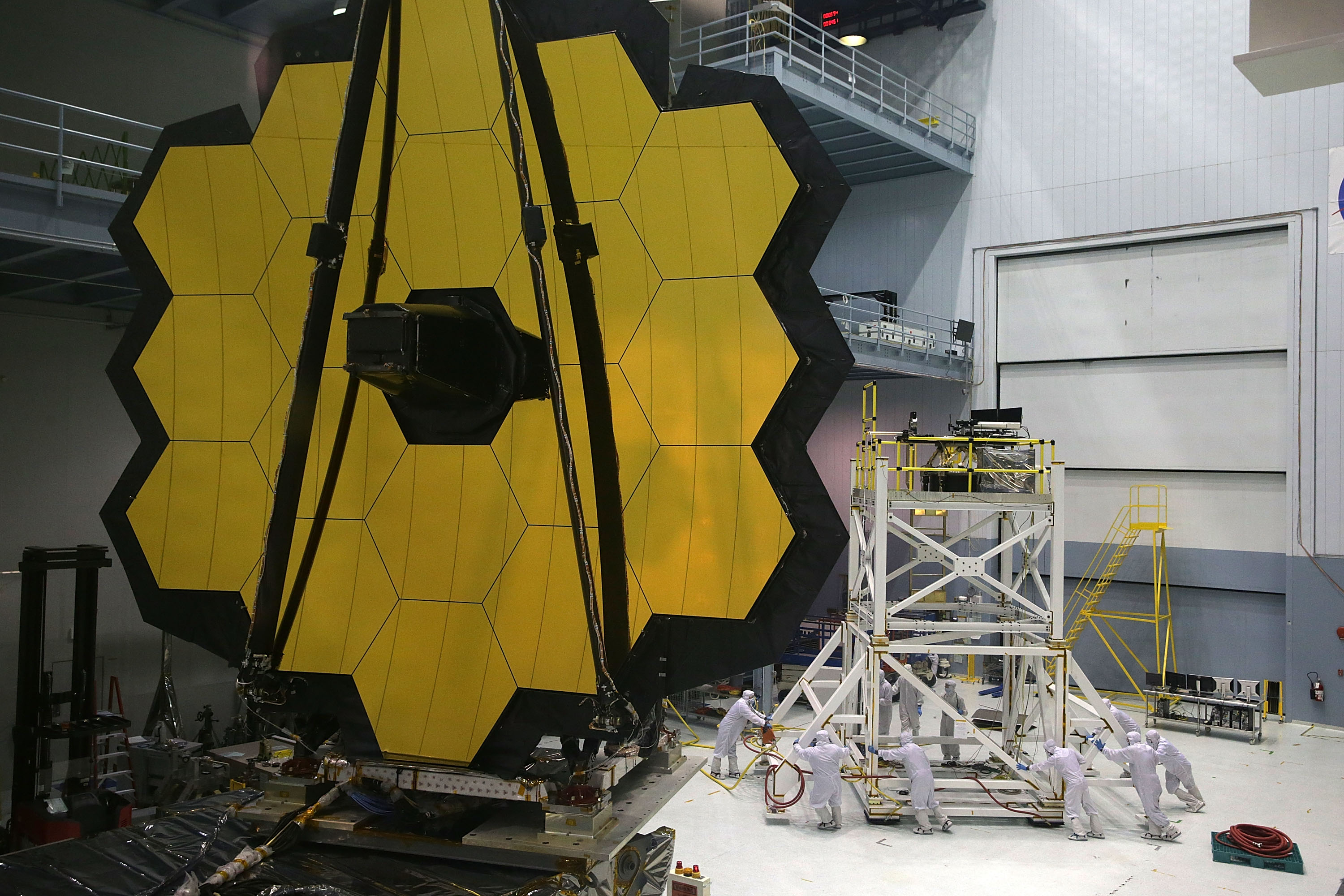
The James Webb Space Telescope observed the aftermath of the eruption just 47 days after it peaked. This represents the earliest follow-up of such an event to date. Because Webb operates in the infrared, it was able to peer through the dust and cool gas ejected during the merger—material that often obscures the view for visible-light telescopes. This early look allowed scientists to analyze the composition of the debris and better understand the energy released during the collision.
The event is classified as a "luminous red nova," an outburst that is brighter than a standard nova but fainter than a supernova. As the ejected gas expanded and cooled, it formed dust, causing the system to glow with a distinct red hue over several weeks.
Implications for Gravitational Waves
Understanding these mergers is critical to the study of gravitational waves—ripples in space-time detected by observatories like LIGO and Virgo. Scientists believe that the pairs of black holes or neutron stars that eventually collide to produce these waves likely passed through a common-envelope phase earlier in their lives. The drag experienced during this phase is what shrinks their orbits enough to eventually lead to a collision.
While the researchers caution that the merger of Big and Little Bao is not yet conclusively confirmed—requiring further observation over the coming years to verify the final state of the star—the event serves as a vital test for existing physics models. As new sky surveys begin to scan the heavens more frequently, astronomers expect to catch more of these rare events in real time, helping to refine our understanding of how binary stars shape the evolution of the universe.
