
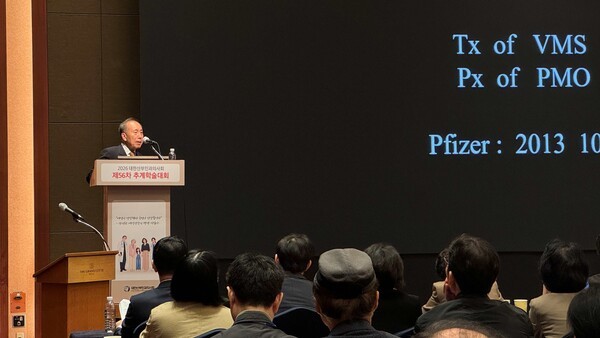
Focusing on Updated Clinical Guidelines
The session, titled "Menopause Treatment is Changing: The Role and Value of TSEC," was led by Dr. Park Hyung-moo of Grace Hospital. The discussion centered on the evolving clinical landscape following the U.S. Food and Drug Administration's (FDA) decision last year to remove "black box" warnings—which previously cited risks of cardiovascular disease, breast cancer, and dementia—from menopause hormone therapy labels.
Experts at the symposium emphasized that this regulatory shift reflects a growing body of scientific evidence, highlighting the need for a balanced assessment of treatment benefits and risks. The presentation underscored the importance of personalized treatment plans that account for a patient's age, underlying health conditions, and breast and uterine status.
Advancements in TSEC Therapy
Dr. Park highlighted the evolution of hormone therapy from first-generation estrogen monotherapy and second-generation estrogen-progestin combinations to third-generation Tissue Selective Estrogen Complexes (TSEC). Duavive, a TSEC agent, combines conjugated estrogens with bazedoxifene to manage moderate to severe vasomotor symptoms and prevent postmenopausal osteoporosis in women with an intact uterus.
According to the 2024 treatment guidelines from the Korean Menopause Society, Duavive is recognized for its favorable safety profile, showing lower rates of breast density increase, breast pain, and irregular uterine bleeding compared to traditional estrogen-progestin therapies. While the drug effectively alleviates symptoms like hot flashes, it remains contraindicated for patients with a history of breast cancer, endometrial cancer, or unexplained vaginal bleeding.
