
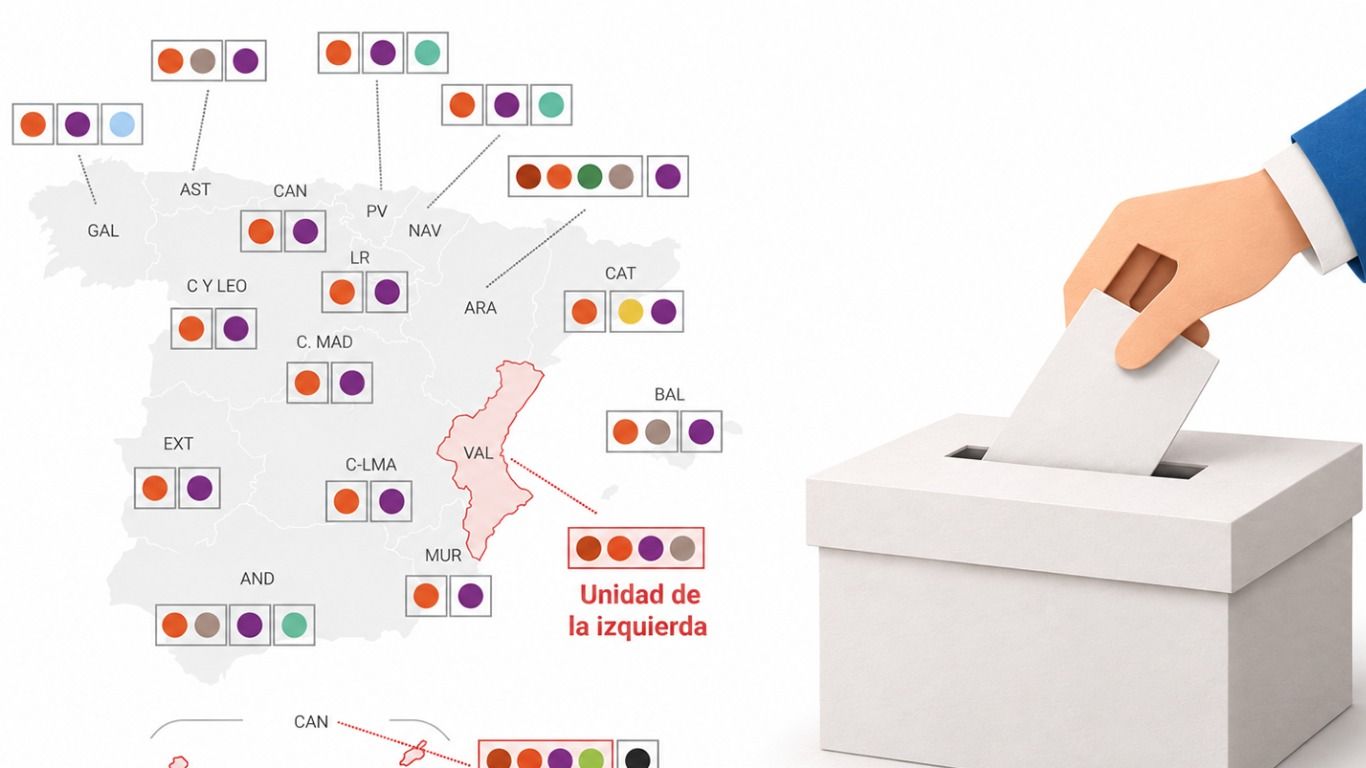
The "Frente Amplio" coalition—backed by Sumar, Izquierda Unida, Más Madrid, and Comuns, with Ada Colau as its candidate for Prime Minister—managed to unite with Podemos in only two autonomous communities: the Canary Islands and the Valencian Community. In contrast, the PSOE has formed a nationwide Senate alliance with Frente Amplio and other progressive parties under the name "Senado de Progreso" to prevent another absolute majority for the PP.
Across Spain's regional constituencies for the Congress of Deputies, ballot configurations vary significantly:
- Andalusia: Leftist forces unite under "Frente Amplio Por Andalucía" (excluding Podemos Andalusia), while Adelante Andalucía runs solo.
- Aragon: The "Chunta Aragonesista-Frente Amplio Aragón" alliance forms without Podemos, alongside a separate "Coalición Existe" ticket.
- Canaries: Nearly all parties to the left of the PSOE form a broad alliance called "Unidad del Pueblo Canario," though Frente Amplio and Podemos maintain separate Congress runs elsewhere.
- Catalonia: Voters will choose between an ERC ticket featuring Podemos members and a Frente Amplio list led by Ada Colau.
- Madrid: Separate ballots exist for Frente Amplio (led by Emilio Delgado) and Podemos (led by Irene Montero, who breaks tradition as a presidential candidate running top in Madrid).
- Valencian Community: Achieved a comprehensive broad-left agreement under the name "Compromís-Front Valenciá," integrating multiple regional and national left formations including Podemos.
Other regions such as Asturias, the Balearic Islands, Castile and León, Castile-La Mancha, Murcia, Navarre, the Basque Country, and La Rioja display varying degrees of alignment, with Frente Amplio and Podemos largely running on separate tickets.