
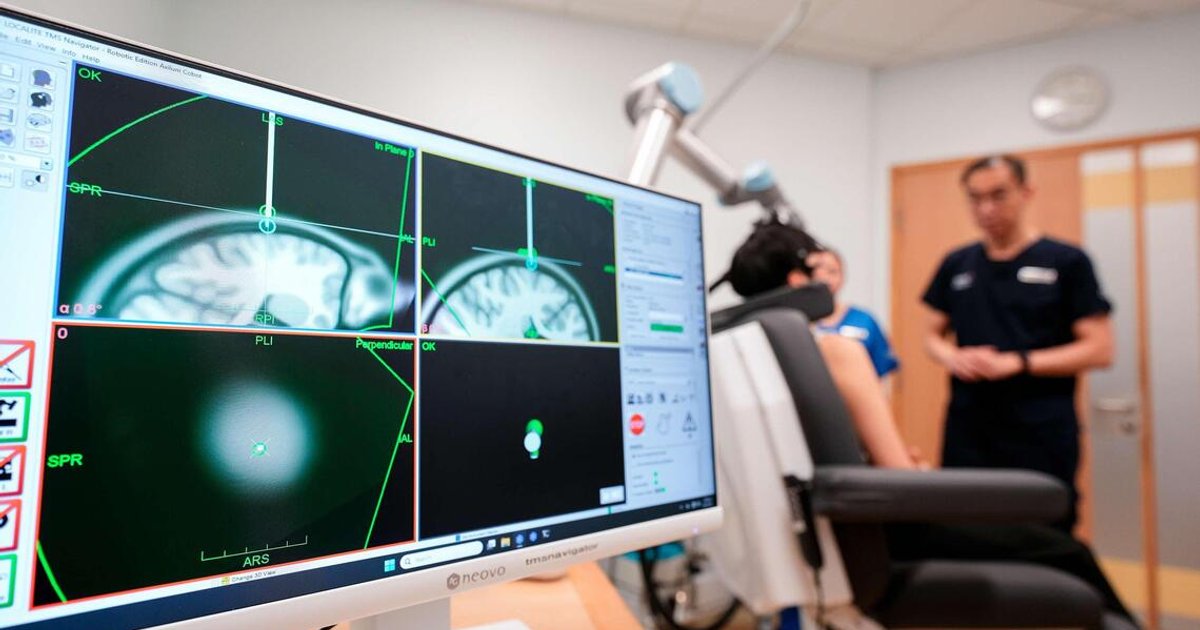
The National University Hospital (NUH) in Singapore has introduced personalised transcranial magnetic stimulation (pTMS), a targeted, non-surgical psychiatric treatment designed to stimulate brain circuitry down to the millimetre for patients with depression and anxiety.
Launched at NUH in early 2026, the advanced clinical service combines functional magnetic resonance imaging (fMRI) scans with AI-powered algorithms to map individual brain circuits. This precision mapping allows medical professionals to direct magnetic pulses specifically to the neurological networks driving mental health conditions, differentiating it from standard transcranial magnetic stimulation (TMS) which relies on approximate, standardized target locations for every patient.
While pTMS is approved in Singapore for treatment-resistant depression and anxiety, NUH researchers have also evaluated its application for severe obsessive-compulsive disorder (OCD) on a case-by-case basis. Trials involving patients with severe, treatment-resistant OCD have shown promising symptom reductions. The technology is currently offered at NUH and the private Alvernia Psychological Health Centre, with plans to expand to other public institutions such as the Institute of Mental Health (IMH), Sengkang General Hospital, and Khoo Teck Puat Hospital (KTPH) backed by grant funding.