
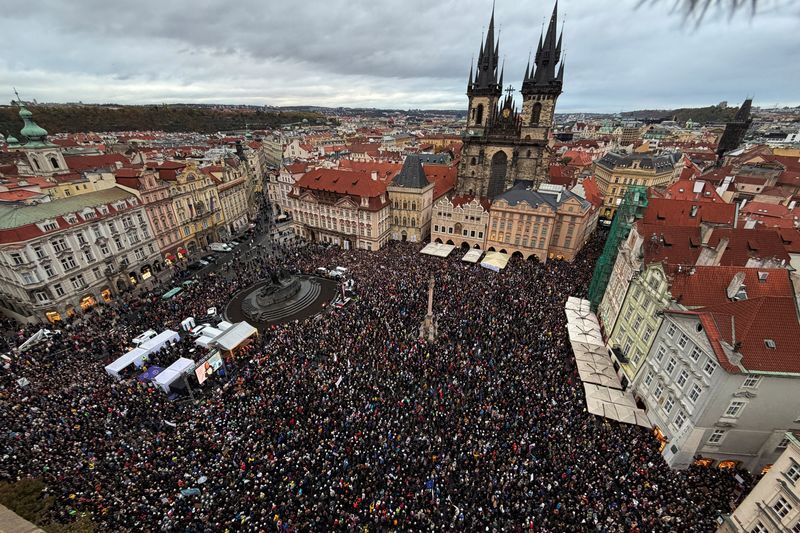
Thousands of protesters took to the streets in Prague and other Czech cities on Tuesday as public television and radio workers launched a one-day strike to oppose a controversial government funding overhaul.
The job action and demonstrations stem from a government plan led by Prime Minister Andrej Babiš to eliminate the monthly household broadcasting fee and shift public media financing directly into the state budget. The proposed reform also includes a 15% financing cut. Workers, university students, artists, and opposition critics argue that funding public media through the state budget would remove viewer independence and open broadcasters up to direct political interference.
During Tuesday's strike, Czech Television's 24-hour news broadcast displayed a darkened newsroom where moderators dressed in black read unusually from scripts, and broadcast curbs were put in place. Protesters marched from the Czech Television headquarters to Prague’s Wenceslas Square to demand the government scrap the reform entirely.
The legislative effort advanced last month when the ruling coalition unexpectedly introduced the bill on a Friday, limited debate, and pushed a preliminary vote through parliament before dawn on a Saturday. The move has drawn widespread comparisons from critics to media overhauls seen in Hungary under former Prime Minister Viktor Orbán.
Prime Minister Babiš has defended the legislation, stating that the administration is simply fulfilling a promise to ease financial burdens on the public and denying that the changes represent an attack on democracy or media independence. The bill now awaits further debate in parliament.
