
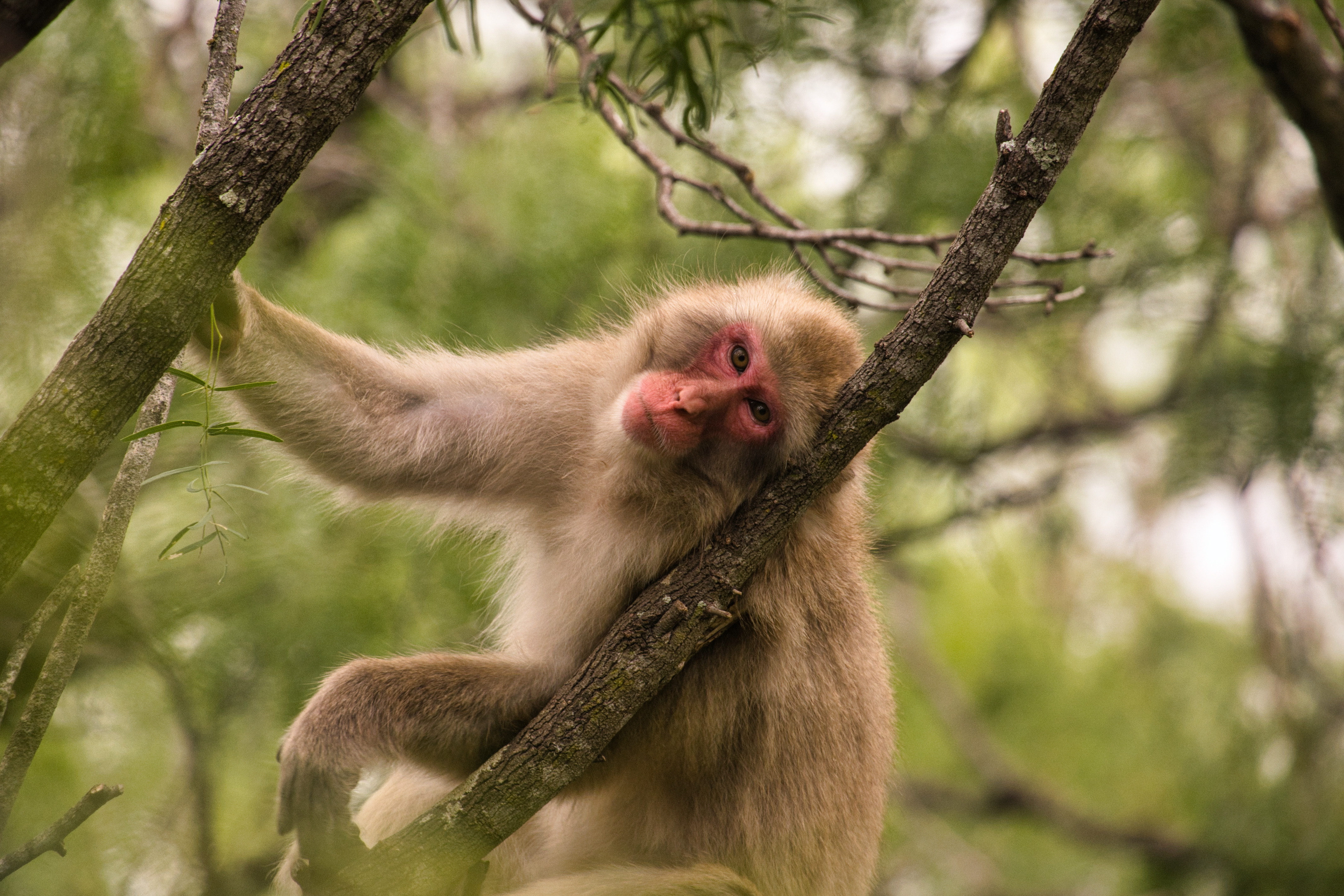
Monkey Business: Macaques Avoid Feces After Viral Outbreak
In a study published in the Royal Society Open Science journal, researchers at the University of California, San Diego, found that macaques at a Texas sanctuary became more germophobic after experiencing a viral outbreak. The study, led by Stephan Kaufhold, a cognitive scientist, aimed to investigate whether individual monkeys would become more wary of picking up pathogens after experiencing an outbreak.
The researchers presented the macaques with two treats: a red grape on a clean surface and a grape on top of macaque feces, encased in epoxy. The goal was to see if the monkeys would eat the grape on the feces, which would indicate a heightened sensitivity to disgust. The results showed that 79% of monkeys who didn't experience the outbreak ate the feces-plated grape, while only 47% of those who lived through the outbreak did so.
Kaufhold believes that the monkeys' increased caution may be a result of a heightened sensitivity to disgust, which could be an evolutionary adaptation to avoid infection. Andrew MacIntosh, a biologist at the Wilder Institute, notes that while the study is intriguing, more evidence is needed to confirm the findings.
The study suggests that animals, like humans, can develop germophobia in response to experiencing a viral outbreak, and that this behavior may be an adaptive response to avoid infection.
