
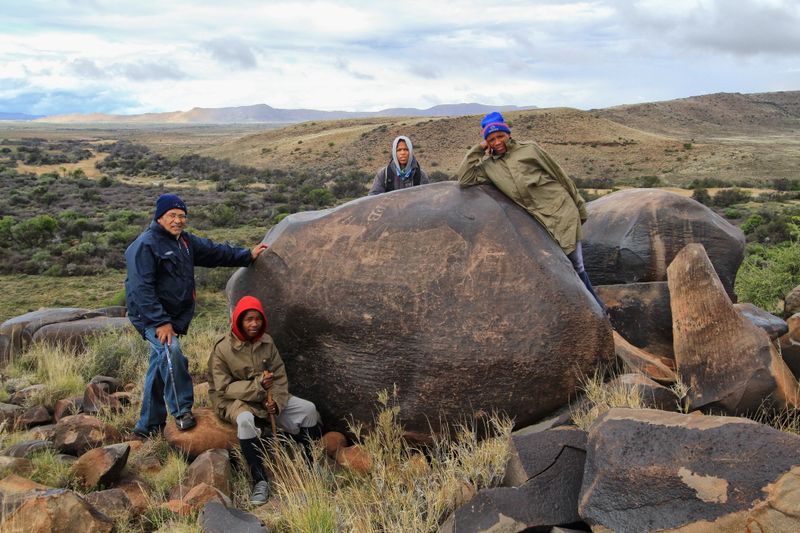
The stark and striking landscapes of South Africa's Great Karoo owe their distinctive geography and rich cultural history to dolerite, a hard ironstone formed millions of years ago by ancient volcanic activity. Rising as molten magma approximately 182 million years ago during the breakup of Gondwana, the rock cooled underground and eventually shaped the region's topography, ecology, and human history.
Because dolerite is exceptionally durable, exposed boulders and flat-topped hills act as a protective shield, preventing softer underlying sandstone and shale from eroding. When exposed to the elements over aeons, the rock develops a polished, dark outer patina—often called desert varnish. This sunburnt surface served as a natural canvas for generations of indigenous San hunter-gatherers and later Khoekhoen herders, who etched intricate engravings of animals, geometric shapes, and spirit figures into the stone.
Beyond its role in rock art, the geological intrusions of dolerite fundamentally influenced life in the arid Karoo. The extreme heat of the rising magma baked surrounding shales into hornfels, providing raw material for Stone Age tool-making, while underground fractures created vital water reservoirs near dolerite sills. In modern times, the mineral-rich rock formations also contributed to regional industries such as salt production, while the rugged terrain and subterranean barriers have simultaneously helped protect the Karoo from threats like industrial fracking.
Today, these ironstone koppies continue to resonate with history, featuring geological sound-producing "rock gongs" used in ancient spiritual practices and housing centuries of layered human narratives across South Africa's heartland.
